Analysis of 10 common mistakes beginners make with compound bow to avoid shooting errors.

Compound bow is a sport that highly combines technique and strength, and the learning process is challenging for beginners. Many archers make various common mistakes in the early stages, which often directly affect shooting accuracy and may even lead to physical fatigue or injury. If beginners can recognize these problems in the early stages of training and correct them using scientific methods, they will significantly improve training efficiency and shooting consistency. This article will analyze in detail ten common mistakes made by compound bow beginners to help archers avoid shooting errors and gradually master accurate shooting skills.
1. Unstable stance leading to shooting deviation
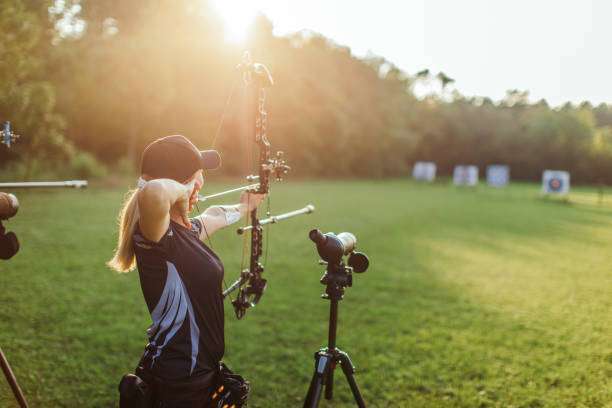
A correct stance is fundamental to stability in compound bow shooting. Many beginners have an unstable stance, leaning forward or backward, shifting their center of gravity. This directly leads to an unnatural draw, causing the arrow to deviate at the moment of release. To correct this, archers should keep their feet shoulder-width apart or slightly staggered, maintaining a stable center of gravity, an upright upper body, and slightly engaged core muscles. Through consistent practice of a standard stance, archers can build a stable physical foundation, providing reliable support for subsequent draw and aiming movements.
2. Holding the compound bow too tightly or too loosely
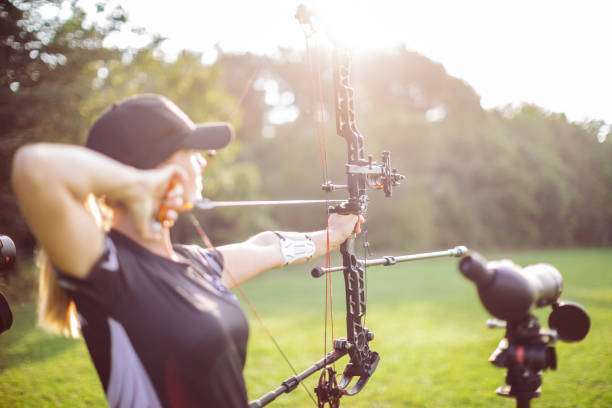
you hold a compound bow directly affects its stability and the arrow’s trajectory. Common mistakes for beginners include using excessive force or gripping too loosely, causing slight wobble when the bow is fully drawn, thus affecting accuracy. The correct grip is to have your palm naturally resting on the bow handle, your fingers relaxed, and your force evenly distributed. During daily practice, archers should focus on the comfort and natural state of their bow grip, allowing muscle memory to form a stable grip, thereby avoiding unnecessary deviations at the moment of release.
3. Incorrect posture when pulling the compound bow
Incorrect bow-drawing posture is a major cause of arrow deviation and arm fatigue. Common problems for beginners include elbows that are too high or too low, tight shoulders, and lack of core muscle engagement. The ideal compound bow draw should rely on the shoulders, back, and core muscles, with the arm naturally bending in an arc and the shoulders remaining relaxed yet stable. Through slow-motion practice and mirror observation, archers can gradually adjust their bow-drawing posture, making the movement smooth and natural, while reducing stress on the shoulders and arms and improving shooting accuracy.
IV. Inadequate respiratory control
Breathing plays a crucial role in archery. Many beginners hold their breath for too long or breathe too rapidly when drawing the compound bow or aiming, resulting in muscle tension and stiff movements. The ideal breathing method is diaphragmatic breathing, maintaining a steady, deep rhythm, and gently holding your breath just before releasing the arrow to allow the body to reach optimal stability. Incorporating breathing exercises into daily training can improve movement stability and shooting concentration, leading to more accurate arrow flight.
5. Lack of focus
Aiming ability directly determines shooting accuracy. Beginners often become distracted while aiming or rely too much on the sight, neglecting hand-eye coordination. To correct this, shooters need to concentrate on observing the positional relationship between the arrow and the target and make fine adjustments before firing. Through low-intensity, slow practice and visual feedback training, shooters can gradually develop stable aiming habits and improve their accuracy.
VI. Improper selection of arrows
compound bow arrow is a common mistake for beginners. The arrow’s material, length, weight, and fletching all affect its flight stability. Using arrows unsuitable for one’s draw weight and stamina can cause the arrow to deviate, lack speed, and even affect the drawing motion. Archers should choose arrows based on their own abilities and shooting objectives, selecting appropriate materials and specifications, and gradually optimizing their shooting experience by practicing and understanding the arrow’s flight characteristics.
7. The tension is not adjusted to the appropriate level.
Both excessive and insufficient draw pull can affect shooting performance. Beginners often experience arm fatigue and stiffness due to excessive draw pull, or insufficient draw pull resulting in insufficient arrow speed and stability. The scientific approach is to gradually adjust the draw pull based on one’s physical strength, arm span, and training goals, ensuring smooth and balanced force in each draw. Draw pull adjustments should be combined with actual shooting experience, finding the most suitable strength level for oneself through daily practice.
8. Neglecting the activation of core muscles
Shooting relies not only on arm strength but also on core muscle engagement. Many beginners neglect the involvement of the abdominal, back, and lower back muscles, leading to unstable movements and excessive shoulder strain. By combining core training with compound bow exercises, shooters can enhance upper body support, resulting in balanced power and natural movements. Consistent core training not only improves accuracy but also reduces fatigue and the risk of injury during training and competition.
9. Psychological stress affects shooting
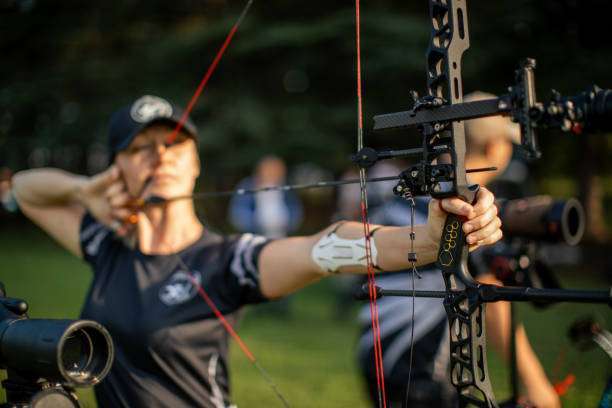
Psychological factors play a crucial role in archery. Beginners may experience rapid breathing, stiff movements, or haste to shoot due to nervousness during training or competition. Psychological pressure directly affects hand-eye coordination and muscle control, thus reducing accuracy. Through simulated competition environments, breathing exercises, and concentration drills, archers can learn to remain calm and stable under pressure, thereby achieving accurate shooting.
10. Lack of systematic training and feedback
A lack of systematic training and self-feedback is a common and persistent problem for beginners. Single-item practice or haphazard training cannot develop effective muscle memory and makes it difficult to identify movement errors. Shooters should develop a daily training plan, combining movement observation, aiming practice, and shooting records to analyze arrow trajectories and accuracy. Through data feedback and continuous adjustments, shooters can quickly identify and correct problems, forming a scientific training system and improving their shooting skills.
Summarize
Compound bow shooting demands a high level of skill, strength, and mental fortitude. Common mistakes beginners make include unstable stance, improper bow grip, incorrect draw posture , poor breathing control, lack of focus, incorrect arrow selection, unsuitable draw weight, neglecting core engagement, psychological stress, and a lack of systematic training and feedback. By identifying these errors and employing scientific corrective methods, shooters can develop stable movements, improve accuracy, and reduce fatigue and injury risk during training. Mastering correct shooting techniques and training methods is a crucial step for every compound bow beginner towards accurate shooting.