7 tips for moving and shooting with a compound bow, ensuring accurate and worry-free shooting in dynamic environments.

Compound bow shooting demands not only accuracy from a stationary position but also the ability to adapt to dynamic environments. Shooting on the move involves a comprehensive application of body balance, aiming stability, breathing and power coordination, and mental focus—essential skills for advanced shooters. In hunting, competition, or wilderness training, dynamic shooting ability often determines success or failure. This article will analyze in detail seven techniques for compound bow shooting on the move, helping shooters maintain accuracy in various dynamic environments and overcome complex conditions.
1. Maintain body balance
The primary principle of a moving shot is maintaining body balance. During movement, the archer’s center of gravity shifts directly affect the arrow’s trajectory. Many beginners struggle with moving while shooting a compound bow, leaning forward or backward, or experiencing instability, leading to unstable movements and decreased accuracy. The scientific approach is to train archers to maintain balance, keep their upper body upright, and engage their core muscles while walking or jogging. Through repeated practice, archers can naturally adjust their posture in dynamic environments, ensuring stability with each draw and release, thus improving shooting accuracy.
II. Pace and Rhythm Control
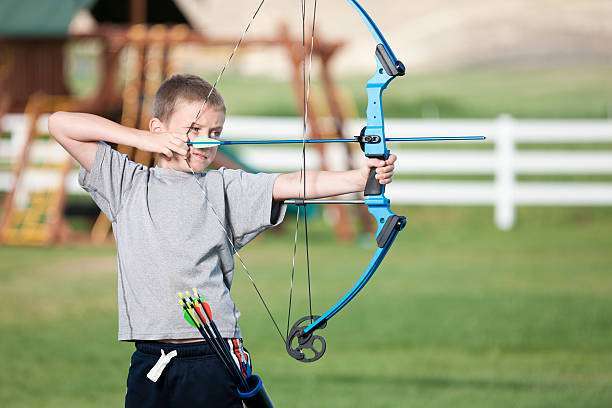
Shooting on the move requires not only maintaining balance but also controlling footwork and rhythm. Walking too fast causes upper body swaying, affecting aiming and power generation; walking too slow may cause missing the optimal shooting opportunity. Ideally, one should maintain a light, natural gait, coordinated with breathing rhythm. In training, archers can begin with slow walking combined with compound bowing exercises, gradually transitioning to medium-speed movement. By matching footwork with breathing rhythm, archers can maintain fluid movements while minimizing the impact of body vibrations on the arrow’s trajectory.
III. The stabilizing effect of the core muscle group
Core muscles play a crucial supporting role in moving shooting. The stability of the abdominal, lower back, and back muscles counteracts minor upper limb swaying during movement, maintaining consistency in the compound bow draw. Many beginners neglect core engagement, resulting in shaky arms and arrows deviating from the target. By combining slow movement with core engagement training, archers can enhance core stability in dynamic shooting, making each draw and release motion smoother and more natural, thereby improving accuracy.
IV. Synchronization of Breathing and Exertion
Coordinating breathing and force exertion is particularly important in moving shooting. When moving, the body easily develops uneven breathing rhythms due to footsteps. Unstable breathing during the compound bow and release of the arrow can lead to muscle tension and aiming errors. The scientific method is to adjust breathing in conjunction with footsteps, maintaining steady breathing during the compound bow and gently holding one’s breath before release, thus achieving optimal stability in the arm and core muscle groups. Through repeated practice of synchronizing breathing and force exertion, archers can maintain precision in dynamic environments and reduce errors caused by body sway.
V. Aiming and Visual Adjustment
Aiming is more challenging in dynamic shooting, requiring constant visual adjustments from the shooter. During movement, the shooter’s perspective changes, affecting their observation of the arrow and target. To maintain accuracy, it’s necessary to train eye-hand coordination, allowing the aiming action to be performed naturally while moving. Shooters can practice low-speed shooting in simulated moving environments, observing the arrow’s trajectory and adjusting their aiming method based on deviations. Long-term practice enhances visual adaptability, enabling shooters to accurately judge distance and direction even in complex environments, achieving a high hit rate.
VI. Movement fluency and muscle memory
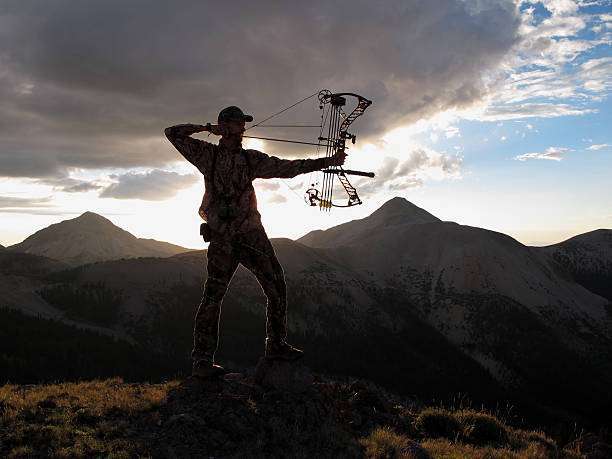
In shooting on the move, the fluidity of movement directly determines the shooting effect. Many beginners become stiff due to tension in dynamic environments, causing the arrow to deviate. Through repeated practice, shooters can develop muscle memory, making the actions of drawing the compound bow, aiming, breathing, and releasing naturally connected during movement. Building muscle memory requires long-term persistence; each training session should focus on the integrity and fluidity of the movements, not just the hit rate. Through high-quality, repetitive practice, shooters can maintain natural movements while moving, reducing shooting errors caused by panic or lack of coordination.
VII. Psychological focus and adaptability
Dynamic shooting not only tests physical control but also demands a higher level of mental focus. While moving, shooters need to simultaneously monitor their footsteps, breathing, aiming, and target changes, which poses a challenge to both concentration and mental stability. Psychological fluctuations directly affect hand movements and force control, causing the arrow to deviate. Through simulated competitions or outdoor training, shooters can enhance their psychological adaptability and learn to remain calm and focused under pressure. Long-term training allows shooters to naturally respond to unexpected situations in dynamic environments, achieving accurate shooting.
8. Training for Adapting to Different Terrain Conditions
Mobile shooting is not limited to flat ground; it may also involve slopes, slippery surfaces, or uneven terrain. The difficulty of maintaining balance and controlling footwork increases when shooting in different terrains. Training should incorporate diverse terrain exercises to understand the impact of changes in the center of gravity on the compound bow motion and adjust footwork and core strength strategies. Through terrain adaptation training, shooters can maintain stable movements in complex environments, thereby improving dynamic shooting accuracy.
IX. Arrow Selection and Adaptability
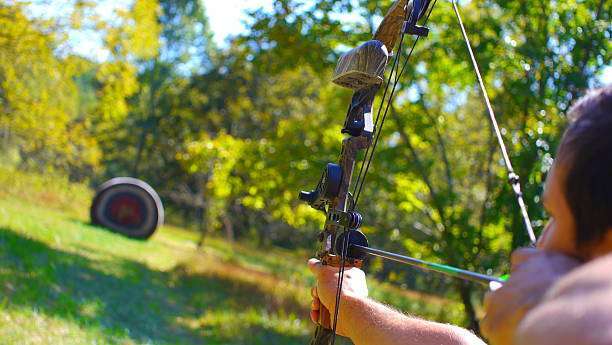
In shooting on the move, the weight and material of the arrow have a greater impact on the shooting effect. An excessively heavy arrow can easily cause arm fatigue during movement, while an excessively light arrow may be affected by wind and deviate from its trajectory. Archers should choose appropriate arrows based on their physical strength, draw weight, and shooting environment, and adapt to their flight characteristics through dynamic training. The correct arrow selection combined with continuous practice can improve the stability and accuracy of dynamic shooting, enabling archers to maintain shooting reliability in various moving environments.
10. System Training and Continuous Feedback
Shooting skills on the move require systematic training and continuous feedback. Shooters should develop daily or weekly training plans, combining static and dynamic compound bow shooting exercises, and recording accuracy, arrow deviation, and changes in body movement. Through data analysis and self-observation, shooters can identify deviations and shortcomings in their movements and make targeted adjustments. Systematic training and continuous feedback not only help shooters quickly improve their shooting abilities on the move but also cultivate scientific training habits, laying a solid foundation for long-term accurate shooting.
Summarize
Compound bow shooting is a highly integrated skill that requires a high degree of coordination in areas such as body balance, footwork rhythm, core stability, breathing coordination, aiming technique, fluidity of movement, mental focus, terrain adaptation, and arrow selection. Mastering these seven techniques allows shooters to achieve accurate shooting in dynamic environments, reduce errors, and improve training and combat efficiency. Through systematic training and continuous practice, every shooter can maintain stable movements and a high hit rate in complex environments, thereby continuously advancing in compound bow shooting and achieving an excellent shooting level.