5 low-light tips for night shooting with a compound bow: The real test is when you can’t see anything!

The unique challenges of night shooting
Compound bow shooting at night differs from daytime archery. It requires not only mastery of basic techniques but also a deep understanding of visual adaptation, motion control, and mental stability in low-light conditions. Insufficient light at night severely impacts aiming accuracy, making it easy for compound bow shooters to overestimate or underestimate the distance between the arrow and the target, leading to errors.
The core challenge of night shooting lies not only in technical movements but also in the overall ability to adapt to changes in vision, psychology, and the environment. Beginners often underestimate the impact of light changes due to a lack of nighttime training experience, mistaking it for simply “not being able to see clearly.” In reality, this is a complex risk that can easily lead to decreased accuracy and errors.
In low-light conditions, compound bow shooters face challenges in their aiming systems, arrow selection, movement habits, and mental state compared to daytime. Top compound bow shooters emphasize that night shooting is an extreme form of training that tests not only movement stability but also the shooter’s adaptability under pressure and uncertainty. Understanding this is a prerequisite for consistent performance in night shooting.
Technique 1: Visual Adaptation and Pupil Adjustment
In low-light conditions, visual sensitivity and pupillary accommodation become crucial factors affecting accuracy. Compound bow shooters should acclimatize to changes in light before entering nighttime shooting environments, gradually transitioning their eyes from bright to low light to improve target visibility in dim conditions.
Top compound bow shooters typically spend several minutes observing and practicing on low-light targets, allowing their pupils and retina to gradually adapt to the dark environment, enhancing their ability to judge target outlines and distances.
Novice shooters often neglect visual adaptation due to their eagerness to fire, resulting in unstable aim and arrow deviation. Night shooting tests not only static visual ability but also the ability to observe dynamic environments, such as the movement of prey under tree shadows, dim lights, or moonlight. Through visual adaptation training, compound bow shooters can maintain a stable aiming motion in low-light conditions.

Technique 2: Low-light aiming devices and target identification
In night shooting, the selection and adjustment of the sight are crucial. Compound bow shooters can use sights with luminous lines, fluorescent lights, or miniature LED illumination to improve aiming accuracy in low-light conditions.
Target identification and background differentiation are also core skills; compound bow shooters need to observe the environment and create a visual contrast between the target’s outline and the background. Top compound bow shooters will select a suitable sight in advance and adjust it for light conditions before night competitions or hunts to ensure accurate arrow aiming.
Novice shooters often overlook target identification in low-light conditions, leading to visual misjudgments. Top compound bow shooters integrate scope use with target observation through training that simulates different lighting conditions, ensuring consistent shooting action and accuracy even in low-light environments.
Tip 3: Movement stability and muscle memory
Nighttime conditions can easily cause tension for compound bow archers, and hand tremors or stiff movements directly affect the arrow’s trajectory. Top compound bow archers develop muscle memory through daily training, automating the actions of drawing the compound bow, aiming, and releasing it. This allows them to maintain stability in low-light conditions without relying excessively on visual judgment. Muscle memory not only reduces psychological burden but also ensures a consistent arrow trajectory when vision is limited.
Beginners often rely too much on visual observation of the arrow’s relationship to the target due to nervousness, neglecting the importance of standardized movements. Night shooting requires synchronization between action and mind; through repeated training, each release of the compound bow becomes a familiar and controllable chain of movements.
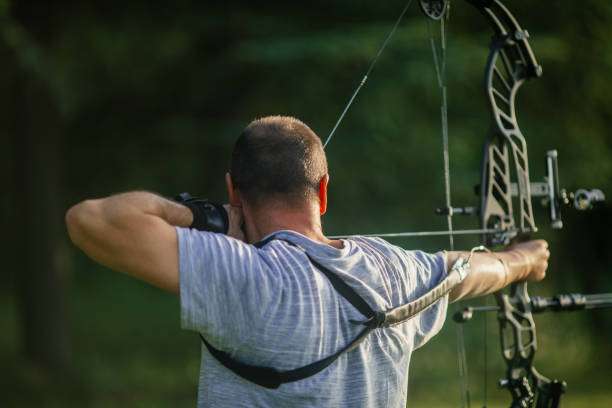
Tip 4: Utilizing and fine-tuning ambient light sources
Even at night, ambient light sources can affect shooting, such as moonlight, starlight, reflections from distant lights, or dappled light through foliage. Top compound bow shooters skillfully utilize these faint lights as reference points for aiming adjustments, while avoiding glare interference from other light sources. Proper use of ambient light can improve distance judgment and directional control in low-light conditions.
Novice shooters are easily distracted by low light when shooting at night, resulting in aiming point drift or sluggish movements. Top compound bow shooters train to recognize the characteristics of ambient light and incorporate them into their shooting strategy, rather than letting them become a distraction, thus maintaining stable performance in complex lighting conditions.
Technique 5: Mental Rhythm and Breathing Control
Night shooting is not only a visual challenge but also a psychological and rhythmic one. Low-light environments increase uncertainty, making compound bow shooters prone to tension or accelerated movements. Top compound bow shooters unify their heart rate and movement rhythm through breathing control and mental rhythm training, creating a natural rhythm for drawing the compound bow , aiming, and releasing. A stable mental rhythm allows them to maintain a consistent arrow trajectory through muscle memory and motor control even with limited visibility.
Beginners who neglect mental rhythm management are prone to premature release or stiff movements during crucial shots, leading to a significant drop in accuracy. Night shooting requires compound bow shooters to integrate mental rhythm into their training, making pressure a natural part of the action rather than an external distraction.
Skills integration and systematic training
Top compound bow shooters integrate five low-light techniques into a systematic training program for night shooting: visual adaptation, low-light aiming, standardized movements, utilization of ambient light sources, and mental rhythm management. This integrated training not only improves the stability of compound bow shooters in low-light conditions but also enhances their environmental adaptability and mental control. Each element is mutually supportive and indispensable.
Beginners who can simulate nighttime environments in their daily training and integrate the five techniques into their movement and mental training will significantly improve their accuracy and safety in nighttime shooting. Nighttime shooting is not only a skill challenge, but also a test of a compound bow shooter’s comprehensive qualities, including visual, psychological, and motor coordination abilities.
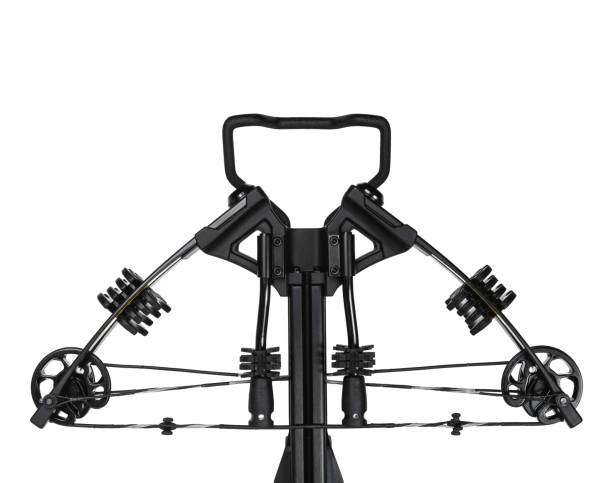
Night Shooting Practice Recommendations
In actual night shooting, it is recommended that compound bow shooters familiarize themselves with the environment beforehand to ensure that the safe zone and arrow landing point are clearly defined. Using appropriate low-light sights and luminous arrows, combined with visual adaptation training and muscle memory chaining, ensures that each pull and release of the compound bow is fluid under low-light conditions. Mental rhythm training and breathing control should be synchronized with the movements to maintain the compound bow shooter’s confidence and stability in nighttime environments.
Night shooting tests not only skill but also safety awareness. Compound bow shooters must strictly adhere to outdoor safety principles, ensuring the direction, landing point, and safety of the surrounding environment. Through nighttime simulation training and low-light skill practice, compound bow shooters can maintain a high accuracy rate in complex lighting conditions while reducing safety risks.
Summarize
Five low-light techniques for compound bow night shooting—visual adaptation, use of low-light sights, standardized movements, utilization of ambient light, and mental rhythm management—form the core logic for consistent performance in night shooting. Top compound bow shooters, through systematic training, highly integrate vision, movement, and mindset, ensuring that low-light environments no longer hinder accuracy.
Beginners who can simulate nighttime conditions in their daily training and integrate these five techniques into their shooting system can not only improve their night shooting scores but also enhance their adaptability to complex environments. The real challenge of night shooting is not just the inability to see the target, but how a compound bow shooter maintains stable movements and mental rhythm in uncertain environments to achieve precise and controllable arrow trajectory.
FAQ
Question 1: How long does visual adaptation take before night shooting?
It is generally recommended to enter a low-light environment 5 to 10 minutes in advance to allow the eyes to gradually adapt to the change in light, while observing the target and the surrounding environment.
Question 2: What is the difference between a low-light sight and a regular sight?
Low-light sights usually have luminous lines or miniature LED illumination, allowing the compound bow shooter to identify the aiming point in dark environments and improve shooting accuracy.