
In compound bow shooting, aiming is the core element determining accuracy. Many beginners find that while they have mastered the drawing motion, their arrows often miss the target, which is frequently due to insufficient aiming skills. Aiming is not merely locking onto the target with your eyes; it involves comprehensive control of posture, breathing, power generation, mindset, and fine-tuning movements. This article will analyze seven compound bow aiming techniques from multiple perspectives to help beginners and advanced shooters quickly improve their accuracy, making each shot more precise and consistent.
I. Stable Posture and Core Support
The first step in aiming is establishing a stable stance. Even with the most precise sights, an unstable body will make it difficult to hit the target. A compound bow archer should stand with feet shoulder-width apart, slightly staggered, creating a natural balance. Keep your upper body upright, core muscles slightly engaged, and shoulders relaxed but not slumped. Core support is crucial; it stabilizes the arm and bow during drawing and aiming, reducing upper body tremors and providing a reliable foundation for aiming. A stable stance not only improves accuracy but also reduces shoulder and arm fatigue.
II. Grip the bow and relax your hands
During aiming, the degree of relaxation in the hand gripping the compound bow directly affects shooting stability. Many beginners habitually grip the bow handle tightly when aiming, which leads to hand vibration and slight bow deviation. The correct way to grip a compound bow is to let the handle rest naturally against the palm, using a light touch to stabilize the bow, rather than gripping it tightly. The points of contact between the fingers and the handle should remain symmetrical to distribute pressure evenly. Relaxing the hand not only improves stability but also allows the archer to remain comfortable during extended practice sessions, enhancing concentration and resulting in more accurate aiming.
III. Coordination of Eye Contact and Sight
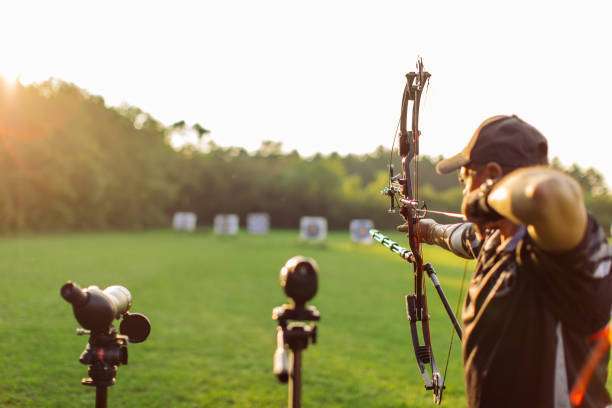
The compound bow sight is an important tool for aiding accurate shooting, but beginners often rely solely on visual estimation and neglect its role. When aiming, align your line of sight with the center line of the sight, keeping your eyes and the arrow on the same plane. While focusing on the target, avoid squinting; keep your eyes relaxed and natural. The sight helps the shooter maintain directional stability at long distances, but ultimately, hitting the target depends on the coordination of the eye, hand, and compound bow. Mastering the coordination between the sight and the line of sight is a crucial step in improving accuracy.
IV. Breathing Control and Shooting Rhythm
Breathing plays a subtle yet crucial role in aiming. Many archers hold their breath or breathe rapidly when drawing the compound bow and aiming, which leads to muscle tension and trembling, affecting shooting accuracy. The ideal breathing method is to maintain steady breathing while drawing the bow and gently hold your breath just before firing, synchronizing the exertion with your breathing. Coordinating breathing with the firing rhythm allows the arrow to fly steadily upon release while reducing body sway. Long-term practice of breath control not only improves accuracy but also helps archers remain calm during competition.
V. Fine-tuning aim and detailed observation
High-precision shooting relies on meticulous attention to minute details. When aiming, compound bow archers should pay attention to fine-tuning the arrow’s tail, the position of the arrow rest, and the target line. Beginners often overlook these small deviations, causing shots to miss to the left or right. Through repeated practice, archers can develop keen observation skills, spot minor aiming errors, and make subtle corrections during the compound bow draw. Fine-tuning involves not only horizontal and vertical adjustments but also wrist angle and elbow height. Mastering these fine-tuning techniques allows the arrow to fly closer to the target, achieving precise shooting.
VI. Psychological Focus and Self-Confidence Building
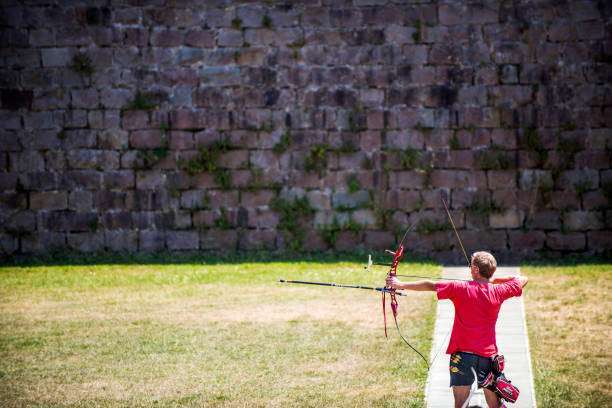
Aiming is not just a physical action but also a psychological battle. Shooters are easily affected by tension, anxiety, and external distractions during the aiming process, leading to tremors and deviations. Developing mental focus is key to improving accuracy. Beginners can build confidence by setting small goals, gradually increasing the difficulty, and using positive self-affirmation. Focus training involves fixing attention on the target, eliminating external distractions, and maintaining physical relaxation. Mental stability allows the shooter to move naturally with each aim and release, ensuring the arrow lands accurately.
VII. Release and Follow-up Actions
The final step in aiming is the release of the arrow. Many beginners release the arrow too forcefully or suddenly loosen their grip, causing it to deviate. A correct release should be natural and smooth, coordinating the power of the shoulder, wrist, and fingers to maintain the stability of the compound bow. After release, the body should maintain continuity of movement, without immediately relaxing or moving, observing the arrow’s trajectory and landing point. This follow-up action is crucial for summarizing experience, adjusting aim, and applying force. Through continuous practice of release and follow-up movements, archers can achieve consistent accuracy in aiming.
VIII. Practice Methods and Continuous Improvement
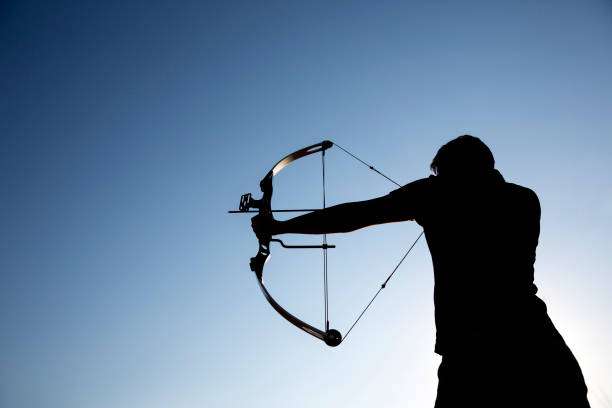
After mastering the seven aiming techniques, systematic practice is key to improving accuracy. Beginners can create a daily or weekly practice plan, including short- and long-range aiming, static and dynamic target practice, and a combination of breathing and mental training. By recording shooting results, analyzing the causes of deviations, and gradually optimizing movements, shooters can develop stable muscle memory. Continuous practice not only makes aiming skills more proficient but also improves physical coordination and mental resilience, resulting in a significant increase in accuracy.
IX. Conclusion
Compound bow aiming techniques go beyond simply locking onto the target; they encompass multiple aspects, including stance, bow grip, breathing, fine-tuning, mindset, and release. Beginners can improve shooting stability and accuracy in a short time by mastering seven key aiming techniques. Consistent systematic practice, attention to detail, and cultivating mental focus will significantly improve a compound bow archer’s hit rate. Whether in daily training or competitive practice, these seven techniques are core methods for beginners to quickly learn and improve their archery skills.