Compound Bow: 5 Key Psychological Tactics for Maintaining Focus During the Game

In the arena of compound bow shooting, technique, equipment, and physical fitness are certainly important, but what truly determines the outcome of the competition is often not the shooting movements themselves, but rather the shooter’s ability to maintain focus, stabilize their mindset, and quickly adjust their psychological rhythm under high pressure.
Many competitors perform exceptionally well in training, yet their performance declines in competition due to tension, distraction, over-excitement, or psychological imbalance. This phenomenon may seem perplexing, but it’s actually because the psychological patterns used in training are completely different from the psychological demands of the competition environment.
The noise of the competition venue, the gaze of the audience, the performance of opponents, and one’s own sense of pressure constantly erode a person’s concentration. Without mastering psychological warfare techniques, even with highly skilled movements, it’s difficult to perform at one’s full potential. This article will analyze five key psychological strategies to help shooters maintain focus in competitions, enabling compound bow shooters to truly remain calm under pressure and achieve optimal performance under high-intensity conditions.
Control the flow of attention and establish a single-target focus mechanism.
compound bow competitions, concentration is most easily affected by external factors. Whether it’s the movement of spectators, noise from the arena, changes in the referee’s pace, the opponent’s performance, or even fluctuations in one’s own score, all can impact the archer’s mental state.
Truly excellent compound bow archers don’t isolate themselves from their environment but rather precisely control the direction of their attention, focusing their cognitive resources solely on the key target area. This focus isn’t about completely blocking out the outside world but about selectively ignoring it.
Concentration techniques in training typically begin with visual locking, meaning that during nocking, pulling the compound bow , and aiming, the archer stabilizes their attention on a fixed focal point, such as the center of the aiming point, the tactile sensation of relaxed hands, or the point of contact between the compound bowstring and their face. By directing attention to information sources that contribute to stable movement, the archer avoids being distracted by the progress of the competition.
Simultaneously, maintaining consistent mental cues during compound bow competitions, such as silently repeating “stay steady,” “aim at the center,” and “breathe smoothly,” helps the archer draw their attention back to the movement itself, establishing a mental structure that separates the internal and external worlds. Long-term training in this process allows the archer to maintain precise execution of movements even under high pressure.
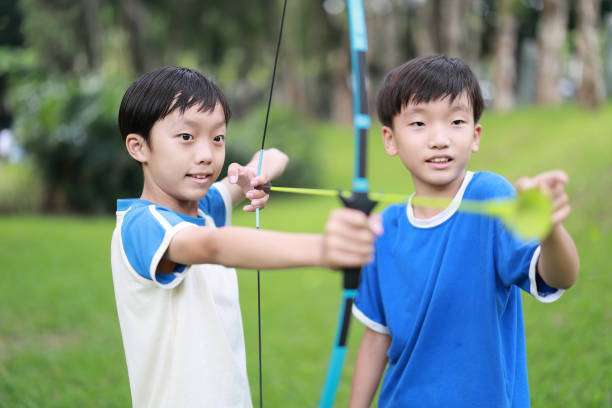
Use breathing rhythm to regulate stress and maintain the body’s rhythm during the game.
Breathing is the most overlooked yet most powerful psychological tool in shooting. When tense, the body automatically increases breathing and heart rate, putting muscles in a state of overexcitation. This leads to increased aiming sway , instability in the compound bow shooter, and premature or delayed release.
The compound bow shooter must use breathing rhythm to restore the body to a stable neural state, bringing the movement back under control. A common situation in competition is that shooters become impatient due to poor performance in the first few shots, their breathing becomes rapid, and their body tenses, affecting every subsequent shot. The correct approach is to use breathing to “reset the rhythm,” especially by taking a deep breath before the compound bow to fully expand the lungs, then exhaling slowly to relax the shoulder and neck muscles. This process effectively reduces the body’s stress level, allowing the next shot to return to a controllable state.
Breathing is not only a physiological regulatory tool but also a psychological suggestion. When a shooter calms their body through breathing, it’s equivalent to telling the brain, “I am in control.” This kind of suggestion is invaluable for psychological stability under high pressure. The characteristic of excellent shooters is not the absence of tension, but the ability to quickly reset the body and movement rhythm using breathing when tension arises.
Establish reproducible movement rhythms
Compound bow shooting lies in the psychological disturbances caused by environmental changes, such as time constraints, ambient noise, wind speed variations, or the impact of opponents’ performance. These factors can make compound bow shooters feel that each arrow is different from their usual training, leading to unstable movements.
To eliminate this influence, shooters need to establish a reproducible rhythm of movement, ensuring consistency in the psychological experience of each arrow and forming a fixed execution process in the brain. Establishing this rhythm includes a fixed preparation process, a fixed way of drawing the compound bow , a fixed aiming rhythm, a fixed release habit, and a fixed finishing action. When these processes become muscle memory, the brain automatically shifts its attention to execution rather than coping with external pressure.
When shooters enter this rhythm, each arrow in a compound bow match becomes like an arrow in training, and the tension of the competition is naturally minimized. Furthermore, rhythm is not limited to movement but also includes mental rhythm. For example, many excellent shooters perform a brief mental reset between each arrow, including gently inhaling, swaying their shoulders, relaxing their body, and reminding themselves to start afresh with the next arrow. These seemingly simple actions are actually an important part of the psychological rhythm of the competition, ensuring that the shooter does not carry the emotions of the previous arrow into the next.
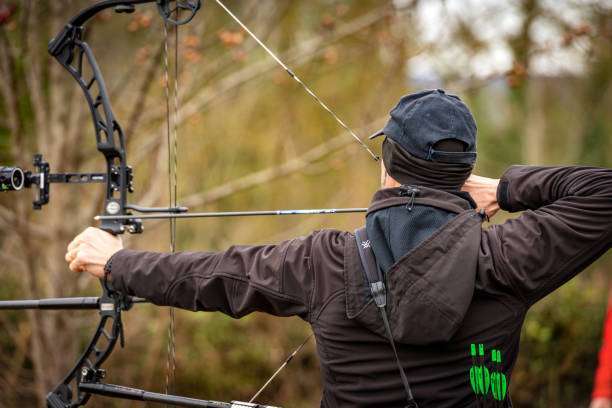
Managing emotional fluctuations
The most dangerous aspect of psychological warfare isn’t the pressure itself, but rather the “emotionalization of performance.” Many athletes, after a few off-center shots in a competition, immediately fall into self-doubt, their emotions dictating their judgment and subsequently affecting their actions.
For example, a single off-center shot might trigger anxiety about their overall condition, pushing them towards a chain reaction of psychological collapse. The core of emotional management is avoiding the transformation of performance into emotion, instead viewing it as feedback to the action. Excellent compound bow archers don’t experience emotional fluctuations due to a single misshot; instead, they use it as a cue—a change in wind, hand tension, or an unstable release rhythm—allowing them to adjust for the next shot.
To avoid a chain reaction of emotions, compound bow archers need to set mental boundaries beforehand, such as telling themselves before the competition, “Focus only on this shot,” “The previous shot is over,” and “The next shot is what I can control.” These mental cues provide a calm “anchor” for the brain when emotional fluctuations occur, helping the archer quickly regain rational judgment. Psychological warfare isn’t about suppressing emotions but about preventing them from interfering with the action—this ability is often the core psychological quality of champion archers.
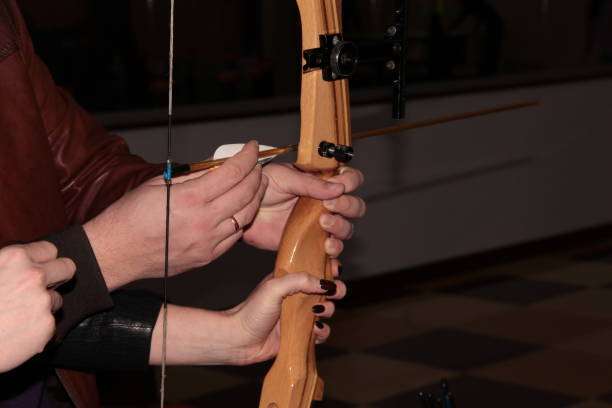
Using the compound bow for pre-race mental rehearsal helps participants adapt to the pressure and pace in advance.
Mental rehearsal is an essential skill for many professional shooters, especially crucial in compound bow shooting. Rehearsal involves visually rehearsing the entire competition process before the actual match, including the arena layout, the feel of the compound bow , audience noise, the referee’s pace, and potential psychological fluctuations. Through rehearsal, the shooter’s nervous system adapts to possible future scenarios, making unexpected situations in the actual match feel familiar.
Many beginners feel nervous in their first competition due to the unfamiliar environment, but shooters who have mentally rehearsed feel as if they have mentally rehearsed the entire compound bow competition process multiple times, preventing panic in real-life situations. Rehearsal also helps identify weaknesses under pressure, such as nervousness during the countdown, distraction when the opponent is in excellent form, or significant changes in breathing rhythm before the crucial arrow.
Through conscious mental training, shooters can build a sense of familiarity, as if they have already experienced it, before the actual compound bow competition begins, significantly reducing psychological pressure during the match.
Conclusion
Compound bow shooting is a technical sport about aiming, drawing the bow, and releasing. However, those who actually compete know that psychological warfare has an influence that surpasses even the techniques themselves.
Mastering five key skills—attention control, breathing rhythm regulation, establishing movement rhythm, emotional management, and mental rehearsal—allows athletes to remain calm and maintain stable movements under high-pressure competition conditions, achieving simultaneous stability in mental strength and physical performance.
Successful compound bow shooters are not without pressure, but they can maintain focus under pressure, making each arrow a manifestation of self-control. When psychological warfare techniques are integrated into training, the athlete’s performance will no longer rely on luck but will become stable, controllable, and powerful, making compound bow shooting a true process of self-mastery and self-breakthrough.