The compound bow has 8 key bowstring tension indicators: rebound speed is the core force determining shooting efficiency.

The compound bow ‘s dominant position in modern archery largely stems from its unique mechanical structure and high-efficiency output. From the pulley system to the bow arm design and overall energy distribution, every detail affects the compound bow ‘s shooting performance. Among all the performance-determining factors, bowstring tension and rebound speed are arguably the most fundamental yet easily overlooked core forces. The bowstring is the component in the compound bow most directly involved in energy storage and release; changes in tension, the properties of the string material, and the speed and stability of rebound all directly determine shooting efficiency, arrow speed, accuracy, and long-term stability.
Many beginners using compound bows focus only on the nominal tension rating, neglecting the dynamic changes in bowstring tension during actual use. The bowstring is not a static component; the forces acting on it during drawing, the changes in pulley winding angle, the instantaneous stretching during rebound, the material fatigue, the influence of humidity on the fiber structure, and the plastic changes after prolonged use all contribute to making bowstring tension a complex and highly variable indicator. If the bowstring tension is unstable, even if the bow arm, pulley, and arrow rest are in perfect condition, problems such as arrow deviation, reduced arrow speed, and increased vibration will still occur during shooting.
To truly understand the performance of a compound bow , one must begin with bowstring tension and rebound speed, breaking down how the bowstring affects energy output at the moment of firing through eight key metrics. These metrics are not merely theoretical data; they profoundly influence the actual performance of a compound bow , allowing archers to determine whether a bow is suitable for their power, rhythm, and shooting style. For professional archers, these metrics are the crucial foundation for optimizing performance, maintaining consistency, and improving results. For beginners, they determine the smoothness of the learning process and the ability to quickly grasp the feel and aiming consistency.
The following content will analyze from multiple dimensions how bowstring tension shapes the shooting efficiency of a compound bow , and delve into how different materials, structures, and environmental factors alter rebound speed, allowing archers to gain a more comprehensive understanding of the true performance of a compound bow .

The dynamic tension properties of the bowstring material determine its energy storage efficiency.
The bowstring material is fundamental to tension performance; the elasticity, flexibility, and structural stability of different materials directly affect energy storage behavior during stress. Currently, common compound bow strings mostly use high-molecular-weight polyethylene fibers, aramid fibers, or blended fibers. High-molecular-weight polyethylene is lightweight, high-strength, and has low elongation, meaning it can effectively reduce energy loss during rebound. Aramid fibers have higher heat resistance and fatigue resistance, maintaining stable tension during prolonged training without significant slack after repeated shooting.
compound bow draw , the bowstring material must be able to withstand a significant amount of instantaneous tension while maintaining it within a controllable range. If the material is too ductile, the archer will feel the pull become soft and delayed, resulting in an incomplete transfer of power at the moment of release and a decrease in arrow speed. If the material is too stiff and lacks flexibility, it will generate excessive vibration upon rebound, leading to inconsistent shooting. The balance of dynamic tension in the material is the first key indicator determining the energy storage behavior of the compound bow .
Different environments also affect the tension performance of compound bow string materials. For example, increased humidity will cause some fibers to absorb water, leading to changes in elasticity. Prolonged exposure to high temperatures will accelerate material fatigue, causing the tension to become uneven. Therefore, bowers must understand the dynamic performance of each material under varying tension in order to determine the appropriate bow string structure for their needs.
The pretension of the compound bow string determines the initial energy reserve and rebound speed.
Pre-tension, or the initial tension on the compound bow string before the bow is drawn, is one of the key indicators determining the bow’s fundamental performance. If the pre-tension is too low, the bowstring cannot store sufficient energy during drawing, preventing the pulley system from operating at its optimal efficiency and resulting in a significant decrease in arrow speed. Conversely, if the pre-tension is too high, the bowstring will be under constant high pressure, accelerating material fatigue, shortening its lifespan, making the pulleys run less smoothly, and potentially causing uneven stress on the bow limbs.
In practice, professional archers often fine-tune the pre-tension based on the bow’s draw weight, pulley settings, and training intensity to maintain it within the optimal energy storage range. Even minor adjustments to the pre-tension alter the rebound speed, resulting in a more stable propulsive force at release. When the pre-tension is properly adjusted, even in high-frequency training environments, the entire compound bow can maintain consistent output performance and a stable shooting rhythm.
Preload tension also affects the baseline speed of the compound bow string’s rebound. The more stable the preload tension, the more stable the rebound speed; if the preload tension fluctuates, the arrow speed will also fluctuate, naturally affecting shooting accuracy. Therefore, compound bow operators must readjust the preload tension when changing the bowstring or adjusting the bow to ensure that the bowstring is always maintained at the appropriate tension level.

The elasticity of a string is closely related to the energy loss at the moment of rebound.
String elasticity is one of the key indicators for evaluating the tension performance of a compound bow string. Whether different materials can maintain their shape under instantaneous stress directly determines the efficiency of energy transfer. If the string is stretched too much when drawing the bow, it will create an additional energy-absorbing effect upon release, preventing energy from being fully transferred to the arrow. An overly elastic string will slow down the rebound speed and make the shooting feel loose, lacking the tight and crisp sense of power release.
However, lower elasticity isn’t always better. If the string has no elasticity at all, it may produce a stronger rebound, making the bow vibrate more noticeably and affecting aiming stability. Professional bowstrings often strive for “controllable elasticity,” allowing the material to have slight elasticity when stressed, but quickly recover upon rebound, making energy transfer both concentrated and stable.
The stretching and contraction curve created by the string also affects the rebound speed. Rebound speed is not only a representation of shooting power but also a crucial factor in accuracy. If the rebound is discontinuous or the speed fluctuates at different stages, the energy transfer of the pulley system will also change, affecting the arrow’s trajectory. Therefore, the uniformity of the string’s stretching and contraction is key to judging the stability of a compound bow .
The bowstring tension has a significant effect on the pulley control point and lever arm.
a compound bow is essentially a complex mechanical lever system, with bowstring tension serving as its control source. When the archer draws the bow, the bowstring tension drives the pulleys to switch between different lever arms, gradually reducing the pull and leading to the release point. Changes in tension affect the speed, timing, and amplitude of the pulley switching, resulting in completely different dynamic feels from different pulley systems during shooting.
If the string tension in a compound bow is inconsistent, the pulley switching will become unstable, causing the archer to feel different points of relaxation at different shots, resulting in a chaotic aiming rhythm, and even premature release or insufficient pull later in the draw. The more stable the tension, the more natural the pulley switching, and the smoother the overall feel of the bow.
Similarly, the energy release of a pulley also depends on the uniformity of the bowstring tension. Concentrating tension in one area causes the pulley to release energy too centrally, resulting in a brief spike in rebound speed, increasing arrow speed but causing instability. Evenly distributed tension allows the pulley to release energy more evenly, making the arrow’s trajectory more controllable and reducing vibration.
Therefore, bowstring tension not only affects the pulling force, but also influences the dynamic structural performance of the entire bow.
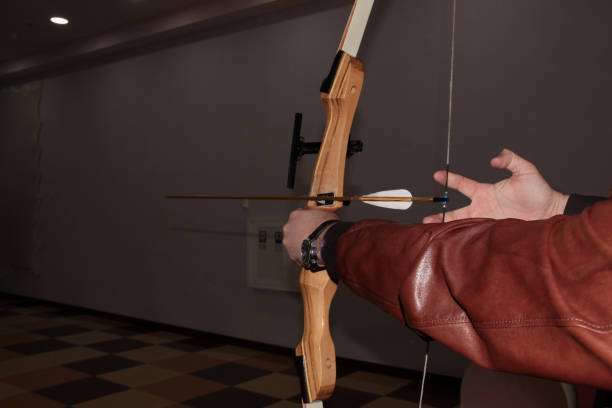
Bowstring tension affects the force balance and rebound structure of the bow arm.
The bow arm is the core of the energy storage system, and the bowstring tension directly alters the stress state of the bow arm. If the tension is too high, the bow arm will bear excessive external force, leading to accelerated fatigue of the bow arm material, which may result in uneven bending or sluggish response over time. Insufficient tension, on the other hand, will result in insufficient energy storage in the bow arm, slowing down the rebound speed and reducing the arrow’s propulsive force.
Furthermore, the speed of the bow arm’s rebound is influenced by the bowstring tension. If the bowstring rebounds too slowly, the bow arm’s recovery speed will be suppressed, delaying the overall energy output and affecting the shooting rhythm. Conversely, the crisper the bowstring rebound, the faster the bow arm recovers, and the higher the arrow’s propulsion speed upon leaving the bowstring.
The lifespan of the bow arm is also affected by the bowstring tension. Severely uneven tension will cause the forces on both sides of the bow arm to be different, gradually causing micro-deformation and eventually resulting in the entire bow losing its original stability. Therefore, maintaining tension balance is not only related to shooting performance, but also to the lifespan of the equipment.
the compound bow string and the residual vibration directly affect shooting stability.
Vibration is the most common shooting feedback felt by compound bow shooters, and one source of vibration is the residual energy from the bowstring’s rebound. If the bowstring tension is uneven or the material is subjected to unbalanced forces, the rebound will generate forces in different directions, causing unnecessary vibration in the bow. The greater the vibration, the easier it is for the aiming point to deviate, especially during continuous shooting training or competitive situations, where residual vibration often makes it difficult for the archer to maintain a consistent shooting posture.
Vibration can also affect components such as the connection points of the sight, arrow rest, and stabilizer. If the vibration is too great, screws are more likely to loosen and parts are more likely to shift, further reducing shooting accuracy.
Therefore, the bowstring tension must be kept stable in order to minimize vibration and ensure that the feel and aiming are consistent with each shot.
The uniformity of the rebound speed determines the arrow’s speed stability and accuracy.
Arrow speed depends not only on the maximum rebound speed, but also on the uniformity of the speed. If the rebound speed varies in stages during release, it will cause discontinuous arrow propulsion, resulting in a deviation in the arrow’s direction after it leaves the bowstring. Uneven speed can also cause instability in the pulley release, making the archer feel a noticeable recoil.
Rebound speed is significantly affected by bowstring tension; the more stable the tension, the smoother the speed curve. Professional shooters emphasize bowstring tension adjustment to ensure consistent speed with every release, making shooting results more predictable.
The rebound speed also affects the arrow’s trajectory. If the speed is unstable, the arrow’s aerodynamic performance will deteriorate, increasing its deviation. Therefore, a highly stable rebound speed is a necessary condition for accurate shooting.
a compound bow string to maintain tension over a long period affects overall training efficiency.
The final key indicator is the bowstring’s ability to maintain tension over extended periods of use. If the bowstring tension drops significantly after a period of use, it not only reduces arrow speed but also affects pulley switching points, aiming rhythm, and the overall feel of the bow. Increased bowstring fatigue can also cause slight elongation, forcing the archer to make frequent adjustments and disrupting training rhythm.
High-quality bowstrings possess excellent tension retention, maintaining stable performance even during extended training sessions. This allows archers to focus solely on shooting without needing to make adjustments. For competitive athletes, tension retention is a key indicator of performance throughout the season.
Conclusion
a compound bow is often drawn to its more visually appealing bow arms, pulleys, or accessories, but the core factors that truly determine shooting efficiency are bowstring tension and rebound speed. Understanding the eight key bowstring parameters allows archers to better assess the dynamic performance of a compound bow and helps users find the most suitable feel and rhythm during subsequent adjustments. From materials, tension, and elasticity to stability, each technical parameter directly affects shooting accuracy, stability, and efficiency.