8 key points for choosing compound bow arrows: the secrets to how materials affect accuracy

A compound bow depends not only on the bow shaft and draw weight but also on the choice of arrows. Many beginners neglect the impact of arrows on shooting accuracy during practice, leading to arrow flight deviations, decreased hit rate, and even increased physical fatigue during prolonged use. A compound bow arrow is not just a simple shaft; it involves multiple factors such as material, length, weight, balance, and fletching design, each of which directly affects the stability of the arrow’s flight and the archer’s overall performance. This article will analyze in detail eight key points for choosing compound bow arrows, helping beginners and advanced archers make informed decisions when selecting arrows and improve shooting accuracy.
I. Selection of Arrow Material
Arrow material is the primary factor affecting accuracy and the shooter’s feel. Common arrow materials on the market include carbon fiber, aluminum alloy, and carbon-aluminum composites. Carbon fiber arrows are lightweight, highly elastic, and have high flight stability, making them suitable for long-range shooting and competition.
Aluminum alloy arrows are very hard but have lower elasticity, making them suitable for beginners’ practice and indoor shooting. Carbon-aluminum composite arrows combine the advantages of lightweight and hardness, making them a common choice for intermediate and advanced shooters. When choosing arrows, beginners should consider their draw weight, shooting environment, and practice goals to select the most suitable material to ensure shooting accuracy.
II. Matching Arrow Length and Pull Force
Arrow length is closely related to the draw weight of the compound bow, directly affecting shooting safety and accuracy. An arrow that is too short may cause the arrow tip to be too close to the bow rest when the compound bow is fully drawn, increasing the risk of slippage or injury; an arrow that is too long will affect firing speed and flight stability.
Generally, the arrow length should be slightly longer than the length of the compound bow arm when fully drawn, by 2 to 3 centimeters, to ensure shooting safety and maintain accuracy. Beginners should measure their own draw weight and arm span when purchasing arrows and choose an appropriate length based on the elasticity of the arrow material.
III. Arrow Weight and Flight Stability
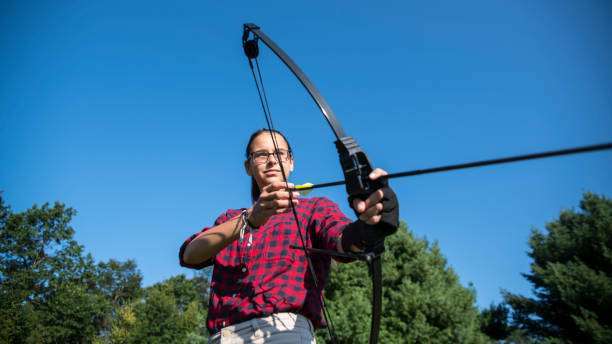
Arrow weight significantly affects flight trajectory and accuracy. Lighter arrows travel faster but are more susceptible to wind-induced deviation; heavier arrows fly more stably but may have limited range. Generally, beginners can choose medium-weight arrows to ensure stability while reducing wind resistance. Advanced archers can choose different weights of arrows for training, depending on the shooting distance and target size, to master accuracy under various shooting conditions.
IV. Arrow rigidity and elasticity
The rigidity and elasticity of an arrow are crucial factors determining its flight stability. Arrows with insufficient rigidity are prone to bending upon release, causing the fletching to deviate from its intended trajectory; arrows with excessive rigidity may increase the load on the arm and shoulder. Compound bow arrows require a balance between rigidity and elasticity, enabling them to withstand tension while maintaining stable flight upon release. Choosing arrows with appropriate rigidity not only improves shooting accuracy but also reduces shooter fatigue during continuous training.
V. Arrow Tail Design and Feather Selection
The design of the fletching and tail feathers directly affects the arrow’s spin and stability during flight. Common tail feather materials include plastic and feathers. Plastic tail feathers are durable and suitable for indoor training, while feather tail feathers are more flexible and suitable for outdoor shooting.
The shape, size, and angle of the tail feathers also affect the arrow’s spin speed, thus affecting stability. Choosing the appropriate type and design of tail feathers can help beginners achieve better accuracy in shooting while also reducing the impact of wind interference.
VI. Arrow Types and Shooting Purposes
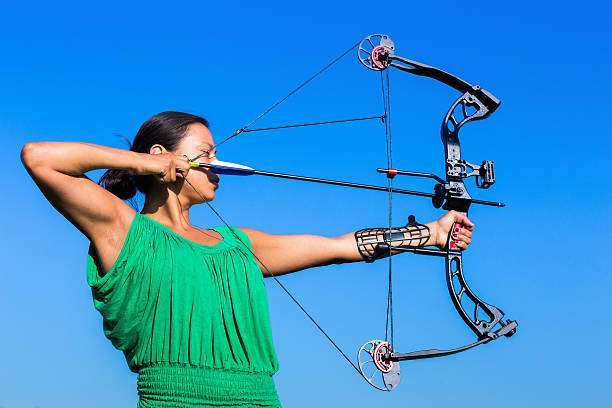
The choice of arrowheads should be based on the shooting purpose and environment. Target arrowheads are suitable for training and competition, with moderate sharpness to ensure safety and accuracy; hunting arrowheads are designed for high penetration, suitable for hunting prey in the wild. The weight of the arrowhead also affects the overall weight and balance of the arrow, thus affecting its flight trajectory. When purchasing arrows, beginners should clearly define their training purpose and environment and choose the appropriate type of arrowhead to ensure that every shot achieves the desired effect.
VII. Balance and Center of Gravity Distribution
The balance and center of gravity of an arrow are crucial to shooting accuracy. Arrows with a forward center of gravity are more stable but travel slightly slower; arrows with a backward center of gravity travel faster but are less stable. Compound bow archers should choose arrows with a moderate center of gravity and good balance to ensure a stable trajectory and high hit rate. By testing different balances with actual shooting, observing their flight performance, and finding the type of arrow best suited to your compound bow and draw weight, you can find the most suitable arrow type.
VIII. Maintenance and Service Life
Even with the most suitable arrows, regular maintenance and inspection are still essential. Over time, arrows may bend, develop damaged fletchings, or loosen arrowheads, all of which affect accuracy. Beginners should check the integrity of their arrows before each training session, repairing or replacing any damaged ones promptly. Proper storage also extends the lifespan of arrows; for example, avoid damp environments and collisions with hard objects. Good maintenance habits ensure that archers keep their arrows in optimal condition after each practice session, improving shooting consistency.

IX. Comprehensive Consideration and Personalized Selection
Compound bow arrows are not determined by a single factor but by a comprehensive consideration of multiple aspects. Material, length, weight, rigidity, fletching, arrowhead, center of gravity, and maintenance habits all need to be taken into account, as well as the archer’s physical strength, draw weight, training objectives, and shooting environment. Beginners can gradually master the flight characteristics and feel of different arrows through systematic training, thus developing a personalized selection strategy. By scientifically selecting and using arrows, archers can achieve high accuracy and consistent performance in every shot.
X. Summary
Compound bow shooting depends not only on the bow itself but also on the choice of arrows. From material to length, from weight to fletching design, every detail affects flight stability and hit rate. By mastering these eight key points for arrow selection, beginners can quickly improve their shooting performance through scientific training while protecting their health. Combining routine maintenance with personalized selection, archers can achieve optimal results in compound bow shooting, ensuring every arrow hits its target accurately.