8 ironclad safety rules for outdoor use of compound bows; one oversight could lead to lifelong regret.

Safety Importance of Using Outdoor Compound Bows
A compound bow outdoors differs fundamentally from archery at a shooting range. The outdoor environment is fraught with uncontrollable factors, from terrain and vegetation to climate, and even the presence of pedestrians, other hunters, and wild animals, all of which can affect the archer’s safety and the arrow’s trajectory. While the compound bow is a highly efficient shooting tool, its high energy storage and arrow velocity mean that improper operation can have extremely serious consequences. Top archers often emphasize that safety awareness is paramount in outdoor shooting; no matter how skilled one is, the potential risks of each compound bow draw and release action cannot be ignored.
Compound bows outdoors without adhering to basic safety rules can not only injure you but also harm others or damage the environment. Beginners often focus too much on technical movements during practice, neglecting changes in the external environment and potential arrow threats; this negligence is the most common cause of accidents. Understanding and strictly adhering to safety rules is a prerequisite for ensuring efficient and accident-free outdoor shooting.
Ironclad Rule #1: Always keep the compound bow pointing in a safe direction.
The most basic safety principle in outdoor shooting is to always point the arrow in a safe direction. Top shooters, whether in training or hunting, ensure that the arrowhead is never pointed at people, animals, or vulnerable objects when drawing a compound bow . Beginners often aim their arrows randomly at targets due to environmental limitations or incorrect mindset, especially in hunting environments, where an arrow deviating from the target angle can directly injure others or themselves. Keeping the arrow always pointing in a safe direction is the primary condition for preventing accidents.
The direction of an arrow not only affects the risk of direct injury but also relates to psychological stability. If an archer is aware that the arrow may threaten others, it will unconsciously affect the compound bow action and release rhythm, reducing accuracy. Top archers manage safe direction and mental state simultaneously, ensuring consistent movements in any environment.
Ironclad Rule Two: Ensure the firing area is unobstructed.
Outdoor environments are complex, and shooting areas may contain rocks, branches, potholes, or other obstacles. These obstacles not only affect the archer’s stance but can also deflect the arrow’s trajectory. Beginners often underestimate the impact of obstacles on the arrow’s path, and hastily opening the compound bow may cause the arrow to bounce or miss the target. Top archers carefully survey the shooting area before each shot, ensuring the ground is stable, there are no dangerous objects around, and they choose the best shooting angle.
Obstacles are not only physical risks but can also increase psychological stress. Shooters in complex environments are prone to tension and stiffness, causing slight deviations in the arrow’s trajectory. Through safety reconnaissance, shooters can minimize environmental risks and create conditions for stable shooting.
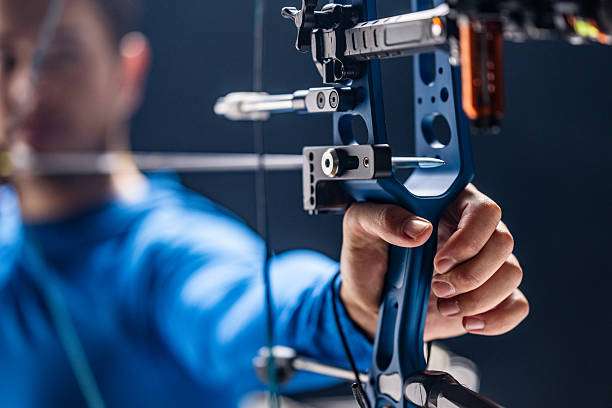
Rule Three: Clearly define the arrow’s trajectory and impact point.
In outdoor shooting, the trajectory of an arrow is difficult to predict, especially at long distances or in strong winds. Beginners often misfire due to misjudging the arrow’s trajectory, resulting in the arrow going astray or causing friendly fire. Top shooters estimate the arrow’s trajectory based on shooting distance, wind direction, and target location, ensuring that there are no other people or objects that could be damaged in the landing area.
Anticipating the arrow’s trajectory is not only a safety measure but also influences shooting strategy. Shooters can judge arrow stability by the trajectory, adjusting the compound bow pull and aiming point to optimize continuous firing accuracy. Ignoring trajectory assessment is one of the most easily overlooked safety flaws by beginners.
Rule Four: Keep the compound bow string and arrows intact.
the compound bow make the integrity of the compound bow string and arrow crucial for safety. Worn compound bow strings, cracked shafts, or loose arrowheads can lead to a broken compound bow or arrow during outdoor use , causing arm or eye injuries. Top archers thoroughly inspect the compound bow string tension, shaft integrity, and arrowhead fixation before each outdoor use to ensure every arrow is in optimal condition.
Novice operators often neglect inspections or overlook small cracks or looseness due to their eagerness for actual combat. This negligence can lead to serious accidents during critical firing moments. Regular maintenance and inspections are the foundation for ensuring safety and the key to extending equipment lifespan.
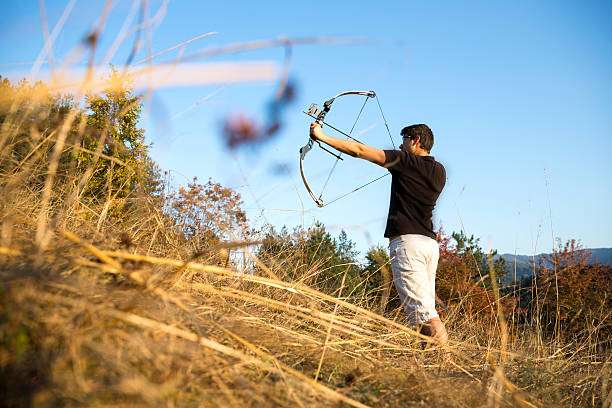
Rule Five: Follow the standard movements for pulling the compound bow and releasing.
Proper compound bow and release techniques are crucial for safety. Outdoor shooting environments are complex, and deviations in technique can cause the arrow to slip from the hand or ricochet, resulting in injury. Top shooters emphasize standardized movements, developing muscle memory through training to ensure each compound bow and release is controllable and fluid. Beginners who haven’t mastered standard techniques, especially when shooting on unstable ground or slopes, are prone to uneven stress on their wrists, shoulders, or the compound bow string, increasing their risk of injury.
Standardized movements can also reduce psychological stress. Proficient movements allow archers to maintain confidence and stability amidst environmental changes and prey interference, reducing safety risks caused by tension.
Rule Six: Wear necessary protective equipment
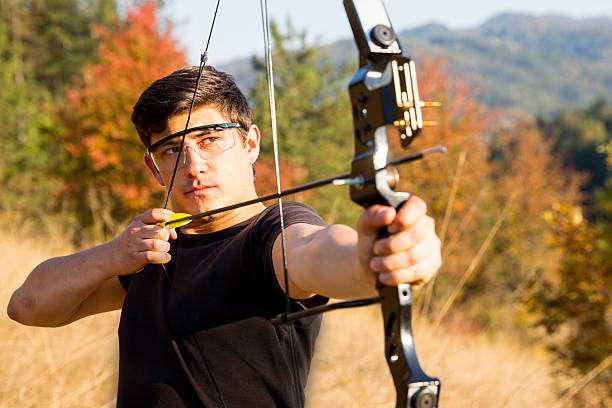
a compound bow outdoors, it is essential to wear protective gear including arm guards, hand guards, and eye protection. Arm guards prevent injury to the forearm from the compound bow string ricocheting, hand guards improve comfort and control when holding the compound bow , and eye protection prevents injury to the eyes from arrows or branches. Top archers always wear full protective gear, whether in training or hunting in the wild; beginners often neglect this and are frequently injured by ricochets or branches.
Protective equipment not only provides physical safety but also increases psychological security. When shooters feel safe, their movements are more relaxed, their arrow trajectories are more stable, and their overall shooting performance is guaranteed.
Rule Seven: Comply with laws, regulations, and site management.
Outdoor shooting and hunting must comply with local laws and regulations, including hunting seasons, prohibited animals, shooting ranges, and safe distances. Top shooters not only know the rules but also proactively plan their shooting areas and targets to ensure compliance and safety. Novices often violate regulations due to lack of experience or curiosity, leading to legal risks and safety incidents.
Obeying rules is also an important measure to protect the environment and public safety. Outdoor shooting involves shared areas, and properly planning the shooting range and arrow landing points can prevent accidental injury to others and create a civilized and safe shooting environment.
Rule Eight: Maintain vigilance and psychological stability
The outdoor environment is full of unpredictable factors, and a shooter’s mental stability directly affects their safety. Novices often become nervous due to sudden movements of prey, changes in wind direction, or complex terrain, leading to deviations in their movements or incorrect releases. Top shooters transform nervousness into familiarity with movements and coping strategies through breathing control, mental rhythm training, and combat simulations.
Alertness is not only reflected in the observation of prey, but also in the continuous monitoring of one’s own equipment and the surrounding environment. Maintaining constant psychological alertness and stable movements are the core guarantees for avoiding outdoor shooting accidents.
Summarize
Compound bow‘s eight ironclad safety rules for outdoor use form a comprehensive safety system, covering everything from arrow direction, shooting area, and impact prediction to equipment integrity, standardized movements, protective gear, adherence to laws and regulations, and mental vigilance. Each rule is crucial; even a single oversight can lead to serious injury or lifelong regret. Top shooters internalize safety awareness into their movement habits and mental state through long-term training, making outdoor shooting both efficient and reliable. Beginners who strictly adhere to these eight rules will not only improve their own safety but also achieve higher accuracy and hunting success rates in the wild.
FAQ
Question 1: How to check equipment safety before using a compound bow outdoors? Check the compound bow string tension, the integrity of the compound bow arm, and the secure fixing of the shaft and arrowhead to ensure stable movement and prevent injury from a broken compound bow or arrow slipping out of your hand.
Question 2: Why is psychological stability so crucial for safety?
Psychological tension can lead to stiff movements, unstable release, or arrow deviation. Maintaining psychological alertness and coherent movements can significantly reduce the risk of accidents.
Question 3: How can a beginner determine if a shooting area is safe?
Ensure there are no people or animals around, no obstacles in the landing area, stable ground, a controllable environment, and that it is consistent with laws, regulations, and hunting management standards.
Related Posts
Compound Bow Outdoor Competition: A Summary of 4 Types of Practical Experience and the Core Logic for Stable On-Site Performance
-
Posted by
 Johnpaul Cremin
4 fatal details in daily maintenance of compound bows: One wrong step in cleaning, storage, or adjustment can ruin everything.
-
Posted by
Johnpaul Cremin
7 hardcore tips to extend the lifespan of your compound bow: The true cost of regular inspection and parts replacement.
-
Posted by
Johnpaul Cremin