5 common mistakes in Compound Bow competition attire and equipment; wearing the wrong clothes can directly ruin your performance.

Competition apparel is not just for decoration, but an extension of performance.
Many beginners believe that competition attire is simply about being ” presentable and neat” or “compliant with regulations,” completely underestimating its actual impact on performance. In compound bow competitions, every outfit and every piece of equipment is carefully chosen.
They directly affect your comfort, range of motion, breathing rhythm, and mental state when performing compound bows .
Incorrect clothing can cause you to unconsciously tighten your shoulders, compress your elbows, restrict back extension, and even create slight friction during the match, thus affecting stability. This effect is usually not immediately apparent, but it accumulates with each round of shooting, and every arrow you shoot will be wasted due to tiny deviations in movement.
Beginners often underestimate the psychological impact of clothing. A close-fitting yet comfortable competition outfit not only allows for smooth movements but also provides a sense of security and reduces external distractions. Conversely, if the clothing is tight, not breathable, or poorly tailored, every time you raise your compound bow , aim, or breathe, you are unconsciously constrained, naturally leading to a decline in performance.
Myth 1: Loose fit always means comfortable
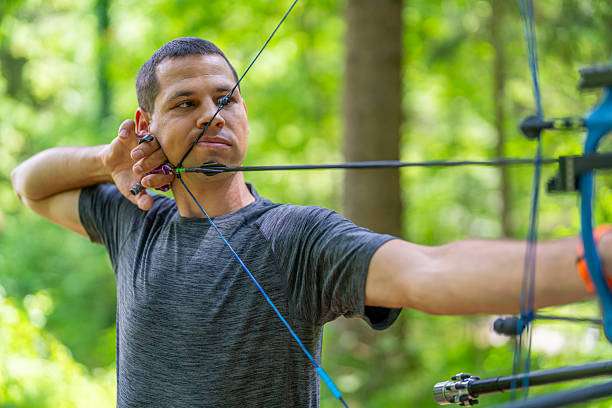
Many beginners mistakenly believe that loose clothing equates to comfortable competition attire, which is a misconception. While it’s true that overly tight clothing can restrict shoulder and back movement, overly loose clothing can be equally dangerous.
the compound bow arm or the compound bow string trajectory during movement . This tiny disturbance can instantly change the arrow’s release direction. Even the slightest friction can cause significant deviations in high-precision competitions.
Additionally, loose clothing can visually affect self-perception. When an archer is drawing a compound bow , if they feel their clothing fluttering or unstable, they will subconsciously adjust their posture to avoid interference, and these adjustments almost always disrupt the initial stable movement.
True comfort in competition apparel requires a balance between a snug fit and freedom of movement. The shoulders, elbows, and back must allow for full range of motion, but excess fabric should not dangle over areas that might come into contact with the compound bow string. This delicate balance is often overlooked by beginners and is a key criterion for distinguishing the equipment of high-level shooters.
Myth 2: Ignoring climate and environmental factors
Compound Bow is constantly changing, from the scorching sun outdoors to air conditioning indoors, from variations in humidity to wind speed; every factor presents a challenge to the selection of clothing and equipment.
Beginners often use the same set of competition gear without considering the weather conditions. As a result, wearing thick fabric in high temperatures causes the body to overheat quickly, and the clothes become soaked with sweat, which not only increases friction but also affects the stability of the compound bow grip .
Wearing thin clothing in cold environments can easily lead to stiffness in the shoulder and back muscles, limiting the compound bow movement.
More importantly, the psychological impact of the environment is often underestimated. High or low temperatures can increase psychological tension, making shooters more prone to stiff movements and loss of rhythm in crucial situations. Equipment selection must take into account both technical skills and environmental adaptability; ignoring this, novices often lose in matches due to a lack of comfort and mental rhythm.
Myth 3: Ignoring the importance of gloves and arm protectors
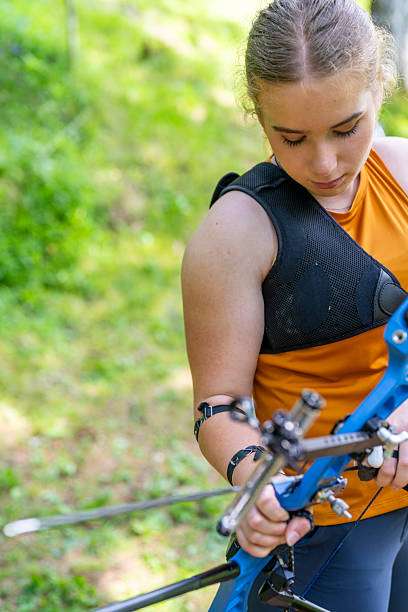
Gloves and arm guards are not simply protective tools, but key equipment that directly affects the quality of a release. Many beginners, in pursuit of a better “feel,” choose gloves that are too thin or made of ordinary materials, or neglect the use of arm guards.
Gloves that are too thin can cause concentrated friction and pressure when gripping the compound bow , leading to finger fatigue and even slight tremors during continuous multi-arrow firing. Gloves that are too short or made of unsuitable material can cause friction or slippage during the compound bow pull , further affecting the stability of the compound bow string release.
Worse still, some beginners believe that protective gear is only for beginners and can be omitted during matches. In reality, when muscles are tense and breathing is rapid in crucial moments, these small pieces of protective gear can significantly reduce instability and ensure consistent movements. Ignoring them often directly drags down performance in the final stages of a match.
Myth 4: Random equipment matching, ignoring overall coordination
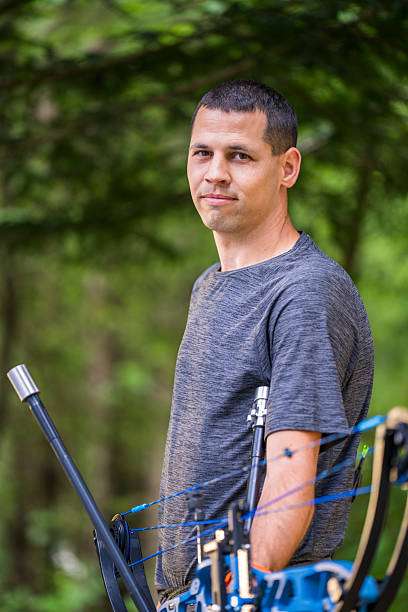
Compound bow competitions are not only a contest of individual skill, but also a test of equipment systems. The combination of clothing, gloves, arm guards, quiver, and shoes needs to balance smooth movements, weight balance, and psychological comfort.
Beginners often focus on the comfort of a single component while neglecting overall coordination. For example, wearing lightweight shoes with insufficient traction can cause a slight slippage while standing; wearing loose arm sleeves can cause friction between the sleeve material and the compound bow chords. These minor inconsistencies can be amplified by movement, ultimately leading to a decline in performance.
In a match, a minor mismatch can accumulate in crucial rounds, leading to disrupted rhythm, stiff movements, and even psychological tension. Equipment selection isn’t a game of individual items, but rather a systemic process. New players lacking a holistic understanding are easily hampered by their equipment in critical situations.
Myth 5: Overly pursuing brand and appearance
Many beginners are misled by marketing and product design, believing that brand-name equipment or a cool appearance can improve their performance. This is a psychological comfort, but in actual competition, the effect is almost negligible.
Compound bow competitions emphasize subtle differences; a glamorous appearance and a prestigious brand do not guarantee comfort, flexibility, and adaptability. On the contrary, an excessive focus on brands may lead to neglecting truly important details, such as the stretch of the garment, the thickness of the arm protectors, and the coefficient of friction of the gloves.
What truly determines performance in a competition is whether the equipment matches your movement style, body type, and competition environment, not the brand name and price. Newcomers who are misled by brands and appearances too early are easily led to wearing the wrong equipment, directly impacting their performance.
The interaction between psychology and equipment
Competition performance is not simply a combination of technique and equipment, but a complex result of the interaction between psychology and equipment. Inappropriate clothing or protective gear can not only affect movement, but also trigger psychological tension, distraction, and self-doubt.
Beginners often underestimate this impact. They believe that as long as they master the compound bow , clothing doesn’t matter; or they think that psychological tension is inherently uncontrollable. In reality, comfortable equipment can significantly reduce psychological burden and allow attention to focus on the execution process, while incorrect equipment can silently increase psychological interference, especially in crucial positions.
Unity of equipment and movement
compound bow competition is the consistency and repeatability of movements. Any unsuitable equipment can disrupt this consistency, thus affecting accuracy.
Every link from shoulder to fingertips, every compound bow movement, is affected by equipment limitations. Arm sleeve friction, tight clothing, changes in glove feel, and insufficient shoe grip may seem insignificant in training, but they accumulate and amplify in crucial rounds.
The consistency between movement and equipment is a hidden weapon of high-level shooters, and a core element that beginners often overlook. Understanding and optimizing this aspect often improves performance more directly than simply increasing training intensity.
How to avoid common pitfalls
The key to avoiding equipment pitfalls lies not in pursuing high-end brands or expensive materials, but in systematic thinking and practical testing.
Before a match, practice multiple times with full gear to ensure the clothing, gloves, arm protectors, and shoes are compatible with different movements and environments. Pay attention to minor friction, tightness, or slippage, as these can be fatal hazards in crucial matches.
When choosing equipment, psychological comfort should also be considered. Does wearing the equipment make you feel confident and safe? Does it reduce extra distractions? Psychological comfort is just as important as the execution of the movements.
Finally, compound bow equipment optimization is an ongoing process, not a one-off decision. After each match or training session, equipment performance should be reviewed, and adjustments and replacements made as needed. Ignoring this can lead to poor performance, even with the most expensive equipment, in crucial moments.
FAQ
- Question 1: Is it necessary to have uniform competition attire?
Complete uniformity is unnecessary, but it’s important to ensure the overall coordination and comfort of the clothing and equipment. Uniformity only provides psychological confidence and is not a necessary condition for improving technique.
- Question 2: Is there really a difference between gloves and arm sleeves during a match?
Yes. The material, thickness, and fit directly affect the feel, friction, and consistency of movement. Incorrect choices can cause small deviations to accumulate in crucial rounds, dragging down performance.
- Question 3: How can beginners quickly find a suitable equipment solution?
Test through simulated match training, focusing on freedom of movement, friction, and psychological comfort. Make small adjustments, changing only one variable at a time to ensure overall system stability.
Related Posts
Compound Bow Outdoor Competition: A Summary of 4 Types of Practical Experience and the Core Logic for Stable On-Site Performance
-
Posted by
 Johnpaul Cremin
8 common fatal mistakes in Compound Bow matches: Why do beginners always collapse in crucial rounds?
-
Posted by
Johnpaul Cremin