Compound Bow’s top shooter’s 6-step pre-match preparation method: the ultimate secret to consistent accuracy.

Compound Bow Pre-Match Mental Adjustment: From Nervousness to Focus
competition Mental preparation is the most crucial part of a top archer’s preparation process. Many beginners believe that archery is just a technical skill and that they only need to “relax” mentally. However, in actual competition, mental state has a more subtle and direct impact on consistent accuracy than technical movements. Top archers spend a significant amount of time on mental training before competitions, including controlled breathing, visualization simulations, and concentration exercises.
Compound bow controlled breathing is more than just deep breathing; it involves controlling the rhythm of inhalation, breath-holding, and exhalation to stabilize the heart rate within an optimal range, keeping muscles relaxed yet powerful. This breath control reduces subtle tremors in the shoulders and back when drawing the compound bow , improving release stability. Simultaneously, the archer mentally rehearses the entire competition, including aiming each arrow, drawing the compound bow , breathing, and releasing, thus minimizing performance errors caused by sudden tension during the actual competition.
Psychological adjustment also includes training to shield oneself from external distractions. The compound bow competition environment may include wind noise, audience noise, and changes in lighting. Top compound bow shooters simulate these conditions in training to develop their mental resilience. Newcomers to compound bow often underestimate the impact of environmental distractions, and when facing a real competition scenario, they are easily prone to misdirecting their arrows due to psychological fluctuations.
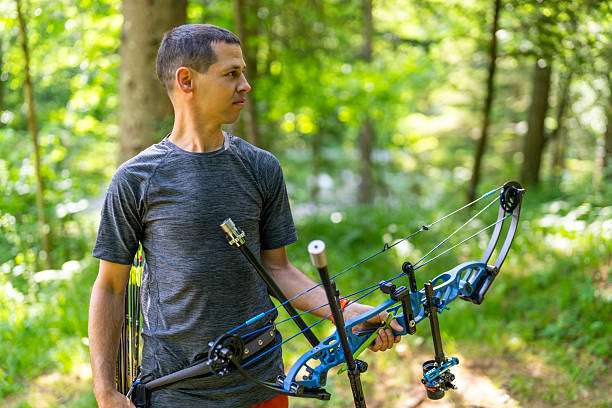
Warm-up and muscle activation: ensuring consistency of movement
Warming up is an indispensable step for every top archer before a competition. Unlike ordinary sports, compound bow archery emphasizes the fine control of small muscle groups, requiring full activation of the shoulders, back, arms, and core muscles. A top archer’s pre-competition warm-up includes not only traditional stretching but also dynamic activation exercises to ensure muscle groups are readily available during competition.
Dynamic warm-up, by simulating competition movements, activates the muscles involved in shooting in advance, preventing stiffness or muscle sluggishness during the compound bow pull . Scapular stability training is particularly important, ensuring the precision of the compound bow pull path and reducing minor deviations in each release. Core muscle activation helps shooters maintain balance in the stance, making the shooting motion smoother and more repeatable.
In addition, warm-up includes finger and wrist exercises. Top archers improve their finger sensitivity and control over the compound bow handle through specific finger exercises and light weights. This preparation not only reduces fatigue but also improves stability during continuous multi-arrow shooting.
Equipment inspection and fine-tuning: ensuring optimal performance
Pre-competition equipment checks are fundamental to maintaining a consistent hit rate. The various components of a compound bow include the bow arm, bow string, sight, stabilizer, and arrow; even minor changes in any of these can affect the score. Top shooters conduct a thorough pre-competition check of their equipment, including bow string tension, sight calibration, stabilizer position, and arrow weight and length.
Fine-tuning is key. Top shooters use experience to judge even the slightest deviation in each arrow, and before the competition, they fine-tune their sights based on weather, humidity, and wind speed to ensure optimal initial shooting conditions. The arrow’s feather angle, nock balance, and tip tightening are all rigorously checked; any oversight can cause a miss during the competition. Beginners often overlook these details, believing that as long as their equipment is complete, they are fine, neglecting the importance of fine-tuning, which prevents even the most precise movements from reaching their full potential.
Equipment checks also include verifying gloves and arm guards. A proper fit for the gloves and comfort of the arm guards are crucial for ensuring a smooth compound bow movement. Top shooters ensure these auxiliary equipment is in optimal condition before a match to minimize external interference.
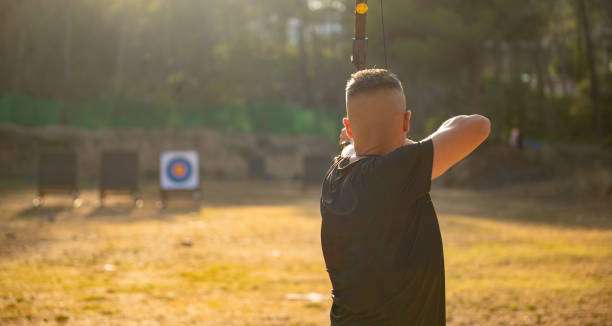
Target and action strategy setting: Using a plan to guide every arrow
Top shooters set clear goals and action strategies before a match. This is not only mental preparation but also a guide for technical execution. Goals fall into two categories: technical goals and psychological goals. Technical goals include accuracy in hitting the center ring, consistency in the compound bow technique, and stability in the release motion. Psychological goals involve maintaining composure, controlling the pace, and responding to unexpected situations.
Action strategies encompass the rhythm of each round of shooting, the choice of aiming method, and responses to environmental changes. For example, in strong winds, the archer will determine the aiming point offset in advance to ensure that the arrow lands within the ideal range. In situations involving multiple consecutive shots, the archer will set a mental rhythm for each arrow to avoid premature or delayed release due to anxiety.
With clear goals and strategies, top compound bow shooters don’t fire every arrow randomly in a match; rather, it’s the result of precise calculation and mental preparation. Novices, lacking this element, often become disorganized under pressure, leading to fluctuations in accuracy.
Pre-competition simulation training: Psychological adaptation under high pressure
Pre-competition simulation training is an indispensable part of top archers’ training. By simulating the competition environment, they can adapt to pressure and distractions in advance. Simulation training is not just about increasing the number of arrows shot, but also emphasizes the stability of movements under high-intensity psychological pressure.
Shooters will strictly adhere to the pace and timing requirements of official matches in simulated games, training their concentration and breathing control. Environmental factors such as wind speed, lighting changes, and even audience noise will be incorporated into the training to reduce sudden psychological fluctuations during real matches. Beginners often train only in comfortable environments and lack adaptability, making them prone to tension, stiff movements, and mistakes in official matches.
Simulated training also includes drills on crucial games. Top shooters deliberately create score differences and psychological pressure, simulating situations of being behind or ahead, so that the brain can get used to high-pressure decision-making in advance and maintain stable execution of actions. This kind of training not only improves technical stability but also lays the foundation for mental resilience.
Pre-match mental rituals and focus
Top shooters often have personalized pre-match mental rituals, which are not just habits but also a neuropsychological preparation method. These rituals can be specific breathing rhythms, sequences of movements, or self-affirmations. Through fixed actions and mental signals, these rituals help shooters enter a state of optimal focus and reduce external distractions.
Concentration is the ultimate goal of pre-match preparation. Top shooters, after completing the ritual, can focus all their attention on the aiming point, the compound bow arm movement, and the breathing rhythm, without being distracted by the surrounding environment or changes in the score. Novices often remain distracted before the match begins, leading to inconsistent movements and fluctuating accuracy.
The pre-match mental ritual, combined with the aforementioned five-step preparation, enables top shooters to reach their peak technical, psychological, and physical state when entering the game, thereby maximizing their consistent shooting accuracy.
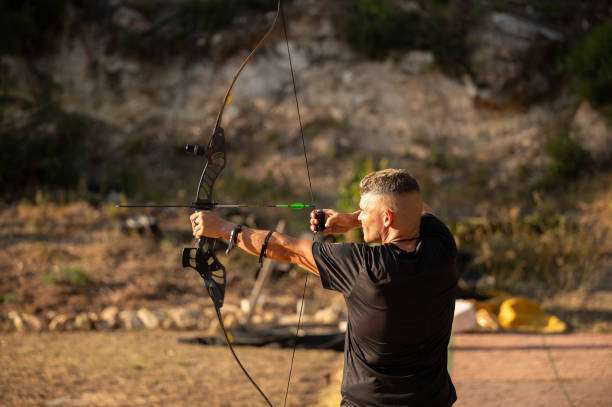
Summarize
The consistent accuracy of top shooters is no accident, but the result of systematic pre-match preparation. From mental adjustment, physical warm-up, equipment inspection, target strategy setting, pre-match simulation training, to mental rituals, every step is meticulously designed and practiced over a long period. Novices who rely solely on technical practice while neglecting systematic pre-match preparation are easily disadvantaged by crucial misses. Understanding and implementing these six steps of pre-match preparation is key to achieving consistently high-level performance.
for compound bow not only affects accuracy but also determines mental rhythm, consistency of movement, and adaptability to the environment. Each step is interconnected and indispensable. Top compound bow shooters integrate these elements into their match habits through scientific methods and long-term training, forming a stable and efficient execution system.
FAQ
Question 1: Is pre-match mental adjustment suitable for all shooters?
Yes, regardless of skill level, mental adjustment is a key element in improving accuracy and consistency. For beginners, simple breathing control and visualization exercises can produce significant results.
Question 2: Can equipment fine-tuning really affect the outcome of a match?
Absolutely. Every tiny change in every part of a compound bow can affect the arrow’s landing point. Pre-match fine-tuning to ensure repeatability and accuracy is an essential step for top archers.
Question 3: How to arrange pre-match simulation training most effectively?
It is recommended to train strictly according to the pace of a match, and to introduce environmental distractions and psychological pressure simulations. Practicing key games and controlling the time can significantly improve psychological adaptability and consistent accuracy.
Related Posts
5 key points for focus training with a compound bow: how to synchronize vision and breathing for accurate shooting.
-
Posted by
 Johnpaul Cremin