Compound Bow Archery Meditation: 4 Core Techniques and Hidden Paths to Improve Stability

Meditation in Compound Bow Archery
Compound bow archery is not only a testament to skill and strength but also a sport requiring a high degree of coordination between mind and body. In modern archery training systems, an increasing number of top archers emphasize the role of meditation. Meditation not only enhances an archer’s focus but also regulates their mental state, reducing tension and anxiety, thereby significantly improving accuracy and movement stability. Archery demands extremely high precision in a split second; any slight psychological fluctuation can lead to a breakdown in movement and inaccuracy. Through scientific meditation training, archers can achieve optimal mental and physical condition, ensuring a high degree of consistency in every compound bow pull , aiming, and release.
Meditation is not simply a relaxation exercise; it is a systematic psychological training method that aims to highly synchronize physical movements and mental states through breathing, attention control, and psychological adjustment. Archers often face environmental distractions, competition pressure, and their own anxiety during competitions and training. Without effective psychological adjustment methods, even the most skilled archers will find it difficult to perform at their full potential. Top archers use meditation to combine focus, breathing control, and mental stability, resulting in more consistent and sustained archery performance.
Step 1: Breathing Regulation and Mental Meditation
compound bow archery meditation is breath control and mental stillness. Breathing not only affects physical stability but also directly impacts mental state. In archery training, archers regulate their heart rate and blood pressure to optimal levels for shooting through deep, rhythmic breathing exercises. The core of these breathing exercises is slow inhalation and exhalation, focusing attention on relaxing the abdomen and shoulders during inhalation and releasing muscle tension during exhalation. Breath control not only reduces psychological stress but also improves the stability of movements, maintaining balance in the arms, wrists, and shoulders when drawing a compound bow .
Mental stillness is an extension of breath control. By focusing on breathing and bodily sensations, compound bow archers can enter a highly focused and peaceful mental state. In this state, compound bow archers are less sensitive to environmental disturbances, and their attention is concentrated on the chain of motion and the trajectory of the arrow. Beginners often experience rapid breathing due to tension during practice, leading to hand tremors and aiming errors. Through systematic breathing and mental stillness training, these problems can be effectively reduced, laying the foundation for subsequent meditation steps.
Step Two: Visual Focus and Motion Coordination
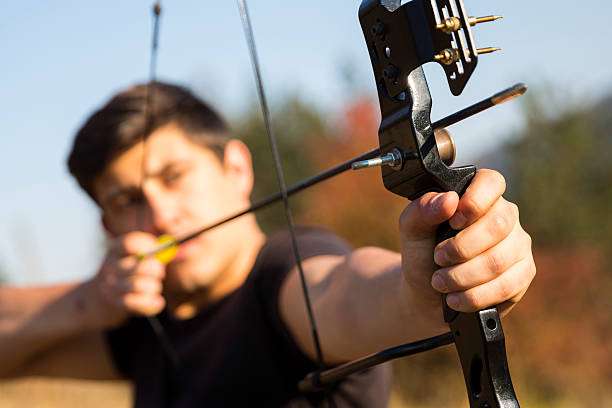
The second step in meditation is visual focus and the coordination of movement. In compound bow archery, visual focus is a key factor affecting accuracy. Through meditation training, archers concentrate their attention on the target while maintaining awareness of their own movements. Top archers practice with their eyes closed or half-closed, first feeling the integrity of their body movements, and then locking onto the target with their eyes open, linking their mind and vision to synchronize the aiming process with their mental rhythm.
Visual focus is not merely about fixing your gaze on the bullseye; it’s about a holistic awareness of the arrow’s trajectory, the stability of the compound bow arm, and body posture. Through meditation training, archers can create a mental image before the action begins, synchronizing action and mindset to reduce deviations during actual shooting. Beginners often neglect coordination due to excessive focus on the aiming point, leading to unstable aiming. Meditation exercises that link visual focus with action help shift attention from single-point locking to overall movement awareness, improving the fluidity and stability of the movement.
Step 3: Emotional Awareness and Psychological Reset
The third step in meditation is emotional awareness and mental reset. Compound bow archers inevitably experience anxiety, tension, and disappointment during training and competition. If these emotions are not effectively managed, they will directly affect the stability of their movements. Through meditation, compound bow archers learn to identify their own emotional states and reset them through breathing and mental suggestion. For example, before performing a compound bow , identify tension, release muscle and psychological stress through deep breathing, and then strengthen focus and confidence through positive mental suggestion.
Emotional awareness is not just about recognizing emotions, but also about regulating them through psychological intervention. Top compound bow shooters use meditation to transform emotional fluctuations into psychological energy, making their movements smoother. Beginners often prematurely release their emotions or stiffen their movements when faced with mistakes or external interference. Emotional awareness and psychological reset training can help compound bow shooters establish an optimal mental state before each shot, ensuring a high degree of alignment between movement and mindset.
Step Four: Movement Imagery and Mind-Body Integration
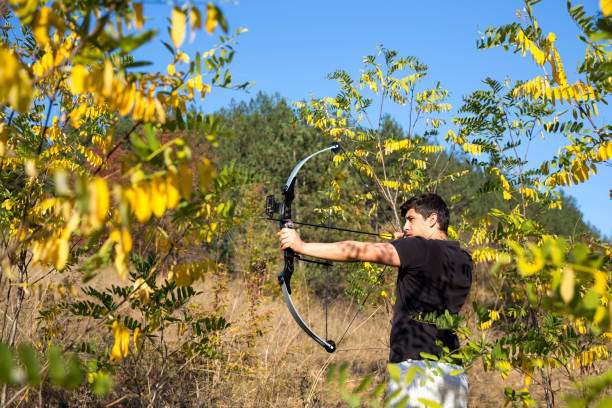
The fourth step in meditation is the integration of action imagery and mind-body connection. This step is the core of meditation training, integrating mental state, visual focus, and the chain of actions into a complete system. Through mental imagery, the archer mentally rehearses the actions of drawing the compound bow , aiming, breathing, and releasing, feeling the rhythm of the movements, the distribution of power, and the trajectory of the arrow. Repeating this imagery training in meditation strengthens muscle memory, making the movements more natural and stable in actual shooting.
Mind-body integration not only improves the fluidity of technical movements but also enhances mental resilience, enabling shooters to remain stable under pressure. Top shooters conduct visualization training before competitions to achieve a high degree of unity between mind and action. Beginners, through meditation training, can reduce discontinuities in movement and psychological fluctuations during actual shooting, maintaining high accuracy and stability in every shot.
Systematic Applications of Meditation Training
By systematically applying four steps—breath control and mental tranquility, visual focus and motor coordination, emotional awareness and mental reset, and motor imagery and mind-body integration—shooters can establish a stable psychological foundation and movement patterns in training and competition. Top compound bow shooters highly integrate their mental state and motor chain through daily meditation training, automating movements while maintaining high concentration. Meditation training not only improves shooting stability but also enhances mental resilience and competition adaptability.
If beginners can systematically integrate the four-step meditation into their training, they can not only improve the accuracy of their movements but also reduce tension and distraction during matches, thereby increasing their accuracy. Meditation training is a crucial bridge for shooters, enabling them to progress from technical skill to mental control, and from proficient movements to consistent performance in matches.
Summarize
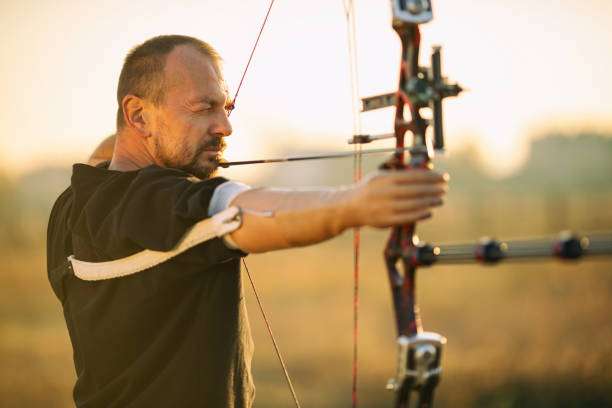
compound bow archery meditation—breath control and mental tranquility, visual focus and movement coordination, emotional awareness and mental reset, and movement imagery and mind-body integration—constitute the hidden path to improved archery stability. Through systematic meditation training, compound bow archers can highly integrate their mental state, movement chain, and focus, achieving perfect synchronization between mind and action. Top compound bow archers maintain a stable hit rate under pressure precisely because of this mind-body integration training. If beginners can persist in the four-step meditation training, they will significantly improve movement stability, mental resilience, and focus, ensuring that every compound bow pull , aim, and release is at its optimal state, thus achieving consistently high-level performance in training and competition.
Meditation training is not only a method of psychological adjustment, but also a systematic skill. Through long-term practice, compound bow shooters can maintain calmness, focus, and fluid movements during matches, laying a solid foundation for stable accuracy and long-term improvement. Mastering the four core techniques of meditation is the hidden path for shooters to break through psychological limitations and improve stability and accuracy.
FAQ
Question 1: How long does it take to see results from meditation training?
Usually, after three to four weeks of daily meditation training, Sagittarians will see a significant improvement in focus, motor stability, and mental control. Long-term adherence can form an automated mental action pattern.
Question 2: Is meditation training suitable for all levels of archers?
Meditation training is suitable for both beginners and advanced archers. Beginners can start with breathing regulation and mental stillness, while advanced archers can combine visual focus, emotional awareness, and action imagery to achieve mind-body integration.
Question 3: How to quickly apply meditation techniques during a competition?
You can quickly enter a focused state by using short-term breathing regulation, mental suggestion, and action imagery before the competition, synchronizing your mind with your actions to reduce competition tension and distractions, and improve stability.
Related Posts
5 key points for focus training with a compound bow: how to synchronize vision and breathing for accurate shooting.
-
Posted by
 Johnpaul Cremin