Compound Bow’s 5-fold tension adjustment mechanism revealed: How to achieve both power and comfort?

In compound bow shooting, “pulling force” is always an unavoidable topic. Many shooters, when first learning compound bow , instinctively pursue higher pulling force, as if a larger number means longer range and greater power. However, as training progresses, most people encounter the same practical problem: once the pulling force exceeds the limits of their body and technique, the hit rate decreases instead of increasing, fatigue accumulates faster, and the shooting experience deteriorates rapidly.
A truly mature compound bow design doesn’t simply pursue peak draw strength, but rather uses a precise adjustment mechanism to allow the shooter to output maximum effective energy within a controllable range. This is precisely the significance of the compound bow’s draw strength adjustment mechanism. Power and comfort are not contradictory, but can be achieved simultaneously through engineering design.
Understanding these five tension adjustment mechanisms is a crucial step from “pulling the bow blindly” to “using force intelligently”.
I. Peak Tension Adjustment: The Real Burden Behind the Numbers
Peak draw is the most intuitive parameter of a compound bow , but also the most easily misunderstood. It refers to the maximum resistance the archer needs to overcome during the draw, not the average load throughout the entire shooting process.
Modern compound bows typically allow archers to adjust peak draw weight within a certain range by adjusting the depth of the bow shank bolt. This seemingly simple adjustment directly determines the amount of muscle strength the archer needs to engage during the mid-draw phase of the bow.
The true value of peak pull adjustment lies not in making the shooter “pull harder,” but in finding a balance point that allows for sufficient energy storage without disrupting the movement structure. When the peak pull is slightly below the shooter’s maximum strength, the movement is more stable and the energy release is more efficient.
Ignoring this point and blindly pursuing high pulling force often leads to compensatory movements, increasing pressure on the shoulders, wrists, and neck, and may even cause sports injuries in the long run.
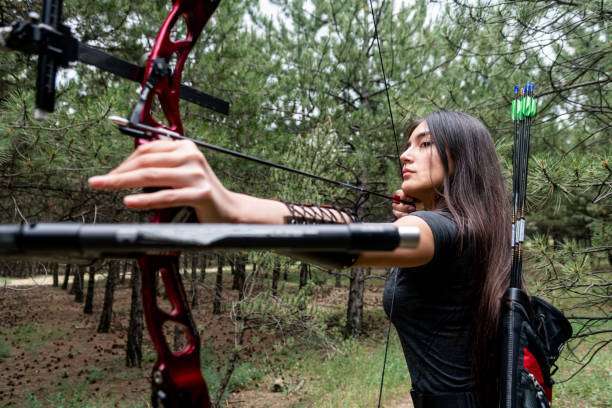
II. Distance Adjustment: A Severely Underrated Core of Comfort
If peak draw force determines “how heavy the draw,” then draw distance determines “how natural the draw.” Draw distance refers to the distance from the initial draw to the full draw position, and it directly relates to whether the archer’s skeletal structure is in a biomechanically advantageous position when the bow is fully drawn.
The compound bow allows for precise adjustment of the draw length via a pulley module or an adjustable eccentric wheel. A proper draw length allows the shooter to achieve stable skeletal support at full draw, rather than relying on muscular strain.
When the pull-out distance is too short, shooters often experience shoulder retraction and neck tilting forward, significantly reducing aiming stability. Conversely, excessive pull-out distance forces shooters to lean back, causing core support to be lost and resulting in poor consistency in aiming.
The essence of draw pull adjustment is to allow the body to complete the shot in the most energy-efficient position. Many shooters still feel discomfort after reducing draw pull; the problem is often not with power, but with incorrect draw pull settings.
III. Effort-saving ratio adjustment: The secret to comfort during full-range pulling.
The energy-saving ratio is one of the core features that distinguishes a compound bow from a traditional bow. It refers to the ratio between the actual weight the archer bears when the bow is fully drawn and the peak draw force.
Through its pulley design, the modern compound bow significantly reduces the archer’s workload during the full draw phase, allowing for more stable aiming over longer periods. Different compound bows offer varying degrees of effort reduction, with some prioritizing stability in competitive play and others favoring rapid release in hunting.
A higher draw ratio isn’t always better. While an excessively high draw ratio makes the full draw phase extremely easy, it also makes the later stages of the draw very sensitive, requiring a high degree of consistency in draw distance. Even a slight deviation in the archer’s full draw position can affect energy release efficiency.
A truly reasonable force-saving ratio should match the shooter’s skill level. Beginners are often better suited to a medium force-saving ratio, which allows the body to maintain a certain tension during the aiming phase, helping to maintain posture stability.
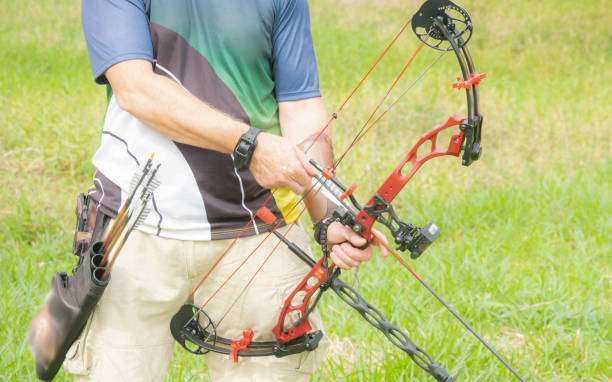
IV. Tension Curve Adjustment: The Engineering Logic of Force Distribution
Adjusting the tension is not just about changing a single value; it’s about redistributing the entire tension curve. Different pulley designs concentrate the force at different stages of the draw.
Some compound bows exhibit high drag during the initial draw, emphasizing explosive loading; others only experience high drag near full draw, emphasizing energy storage after the bow has stabilized. This difference in curves significantly alters the shooting experience.
The significance of adjusting the draw curve lies in ensuring that power is applied “at the right time.” For beginners, a gentler draw curve helps establish proper technique; for advanced archers, a more aggressive curve can increase arrow speed without increasing fatigue.
Force itself is not scary; what truly affects comfort is whether the timing of the force is appropriate.
V. Modular Adjustment System: Key to Personalized Adaptation
Modern compound bows increasingly emphasize modular design. By replacing different pulley modules, stop structures, or adjustment components, archers can fine-tune the draw weight, draw length, and feel without replacing the entire bow.
This modular adjustment mechanism marks the transformation of the compound bow from a “standard tool” to a “personalized system.” Archers no longer need to adapt to the bow, but rather allow the bow to gradually adapt to their own body and technical changes.
The significance of modularity lies not only in convenience, but also in allowing shooters to continuously optimize settings as their skills develop. As strength increases and movements become more refined, pull and curve can be adjusted gradually, without having to overcome too many hurdles all at once.
This gradual adaptation is the core prerequisite for achieving both power and comfort in the long run.
VI. The True Relationship Between Strength and Comfort
Many archers mistakenly believe that comfort means sacrificing performance, and power means enduring discomfort. But in the compound bow design, the opposite is true. A truly comfortable setup often unleashes greater effective power.
When the archer no longer fights against the equipment but completes the movement along the trajectory of the arrow, the stability of the body and the consistency of the release will be significantly improved. The initial velocity of the arrow, the flight stability, and the accuracy will increase accordingly.
An uncomfortable tension setting only creates wasted energy. The more muscles exert, the less energy is actually transferred to the arrow.
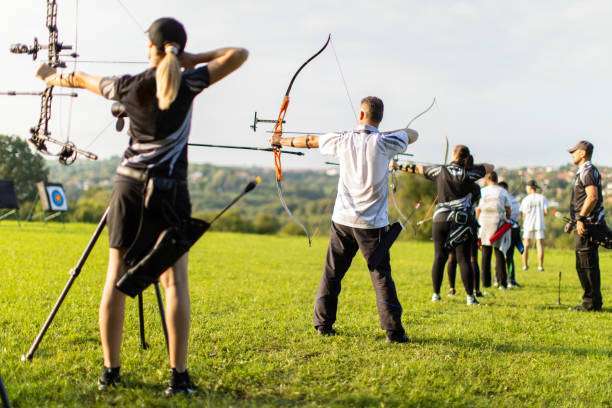
VII. Common Misconceptions and Real-world Consequences
In archery, many archers often fall into a one-sided mindset when performing the crucial operation of adjusting the draw weight. They focus solely on the simple indicator of “can I draw it open?”, concentrating only on whether they have enough strength to pull the compound bow open, completely ignoring another equally important, or even more crucial, factor: “can I hold it steady?” It’s important to understand that holding the compound bow steadily plays a vital role in accurate shooting, directly affecting the arrow’s trajectory and the final hit.
This mindset, which focuses solely on whether or not a compound bow can indeed provide archers with a certain psychological satisfaction in the short term. When they successfully pull a compound bow with significant resistance, they feel a sense of power and superior ability, as if they have greatly improved their archery skills. However, this superficial satisfaction is only temporary. Once the timeline is extended and long-term training begins, the problems stemming from this mindset will gradually become apparent.
In actual training, excessive pressure in the compound bow can lead to a series of serious consequences. The most obvious is distorted movement, although this distortion often doesn’t appear immediately. Initially, the archer may feel everything is normal and can still complete the shooting motion relatively smoothly. However, as training continues, physical fatigue begins to accumulate. During this process, the burden on the body from excessive pressure increases, and the problem of distorted movement gradually becomes amplified. The originally standard archery posture may become distorted due to excessive pressure, affecting the stability and accuracy of the entire shot.
Fluctuations in accuracy are a common consequence of excessive draw tension leading to distorted technique. Due to this distortion, the arrow’s launch angle and force become unstable, making its trajectory unpredictable and resulting in inconsistent accuracy. Furthermore, shoulder and elbow discomfort is another significant issue. Excessive draw tension places additional pressure on the shoulder and elbow joints, easily leading to pain and injury over time, impacting the archer’s training and competition. Inconsistent release is also a common consequence. Because of the distorted technique, archers struggle to maintain consistent force and timing when releasing the arrow, resulting in inconsistent shots and severely affecting overall shooting quality.
Therefore, proper draw weight adjustment is a highly responsible choice for future training. It’s not just about easily drawing the bow now, but more importantly, about considering the long-term training effects and one’s own physical capacity. Archers should abandon the practice of blindly choosing a compound bow to show off their strength, only for the sake of immediate vanity. Only by choosing the right draw weight can one ensure continuous improvement in archery skills over long-term training, avoid various problems caused by excessive draw weight, and lay a solid foundation for their archery career.
8. Adjustment strategies for shooters at different stages
In the beginner stage, priority should be given to ensuring complete and comfortable movements; it’s better to err on the side of lower tension rather than higher tension. In the intermediate stage, tension can be gradually increased while maintaining stable movements. Performance improvements can be achieved by adjusting the curve rather than simply adding weight.
High-level shooters often don’t push the pull to its limit, but rather choose a setting that remains stable under high pressure. This restraint is a testament to experience.
IX. The Shift from Parameters to Experience
Once a shooter truly understands the tension adjustment mechanism, their focus will shift. They will no longer be fixated on the numbers on paper, but will pay more attention to physical feedback, fatigue rate, and long-term consistency.
Rally power is no longer something to show off, but a tool to improve accuracy.
10. Conclusion: The strongest power is the power of sustainability.
the compound bow tension adjustment mechanism is never to make the shooter “pull harder,” but to enable the shooter to consistently output higher quality shots over a longer period of time.
Power and comfort are not opposites, but rather two stages on the same path. When the power of a compound bow is properly channeled, comfort is no longer a compromise, but a manifestation of efficiency.
A truly skilled archer never pursues maximum draw strength, but rather the ability to draw the arrow steadily in any environment.