Compound Bow : 6 High-Pressure Game Techniques to Double Your Hit Rate Under Pressure

Almost every archer who practices compound bow has achieved satisfactory results in training, only to find that all the familiar feeling vanishes instantly when they actually step onto the competition line. Their palms begin to sweat, their breathing becomes erratic, their aiming point wobbles violently near the bullseye, and their once stable release becomes hesitant and stiff. This isn’t a sudden decline in technique, but rather a typical reaction to high-pressure environments.
compound bow competitions lies in the fact that they don’t simply test a shooter’s accuracy; instead, they push the psychological, physiological, equipment, and time pressures to their limits simultaneously. Many people mistakenly believe that inconsistent performance in competitions is due to “insufficient mental fortitude,” but the real reason is often a lack of systematic coping strategies for high-pressure situations.
High-level shooters aren’t immune to nervousness; rather, their technical structure and mental adjustment methods allow them to maintain high repeatability even under pressure. This article will delve into six crucial techniques from the real-world scenarios of compound bow matches, helping you understand why, under pressure, accuracy isn’t dictated by emotions, but rather a result that can be designed and trained.
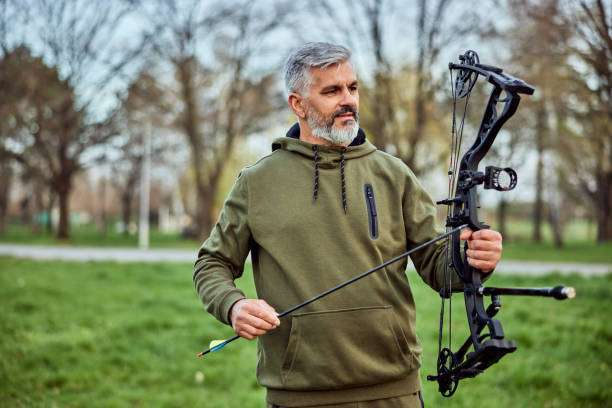
First, high-pressure competition is not an emotional issue but a rhythm issue.
In a match, tension isn’t the enemy; a loss of rhythm is. Many shooters, once they realize they’re tense, try to force themselves to relax, only to focus more on their physical reactions, falling into a vicious cycle. In reality, tension is a natural physiological activation state; it doesn’t directly lower accuracy. What’s truly fatal is a disrupted rhythm.
Compound bow shooting relies on a highly stable time structure of movements. From taking position, raising the compound bow , pulling the compound bow , aiming, and releasing, each stage needs to form a clear and fixed sequence in the mind. When the competition environment introduces time pressure, audience attention, and performance comparisons, the most common problem for shooters is unconsciously speeding up or delaying a certain stage.
In archery, we observe vastly different performances from different people. Some, after fully drawing the compound bow, are filled with hesitation and apprehension, reluctant to release the arrow. They continuously extend their aiming time, seemingly trying to improve their accuracy. However, as time passes, muscle fatigue rapidly accumulates. Their arms begin to tremble slightly, and their strength gradually dissipates, undoubtedly negatively impacting the final shot.
Others go to the other extreme, rushing into shooting as soon as they begin aiming. They do this to try and quickly escape the tension, not wanting to linger in that tense atmosphere. However, this hasty action often results in a significant drop in the quality of the shot, making it difficult to achieve ideal results. In essence, both of these behaviors stem from a breakdown in rhythm.
So, what’s the truly effective way to cope with high-pressure competition situations? The key lies in shifting your focus from emotions to the rhythm itself. Many might think that maintaining a “relaxed” state is paramount during a match, but top shooters have a different approach. They don’t simply pursue “relaxation”; instead, they prioritize the completeness of the movement sequence. They meticulously follow predetermined steps, executing each movement methodically, from pulling the compound bow and aiming to releasing—each step precise and executed. When they firmly grasp the rhythm, something magical happens. The tension that initially causes discomfort transforms into heightened focus. In this highly focused state, they can better perform at their best and achieve outstanding results.
II. Aiming in a match is not about finding the exact target, but about accepting the swaying motion.
In training, shooters often have ample time to wait for a “perfect aim,” but in competition, this pursuit can become the biggest psychological burden. Even the slightest tremors around the bullseye are magnified under pressure, causing the shooter to fall into a vicious cycle of constant correction.
compound bow aiming is not eliminating sway, but accepting its presence. Any human system under tension will inevitably produce slight movements; attempting complete stillness only triggers more muscle intervention. High-level shooters in competition do not wait for the aiming point to become completely still, but rather release the ball within a controllable range of sway.
When a shooter shifts their focus from “stopping at the target” to “executing the release procedure while the target is moving,” their psychological burden decreases significantly. This shift is not simply a matter of adjusting mindset, but rather an upgrade in understanding the essence of shooting. Consistent accuracy in competition stems from a high degree of adaptability to imperfections.
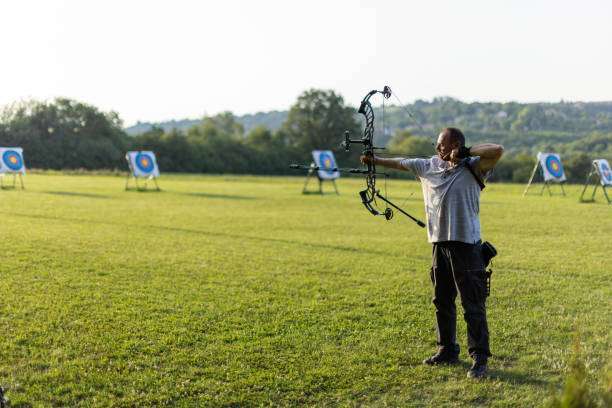
III. The Real Reasons for Release Failure Under High Pressure
Many shooters encounter an extremely frustrating situation in compound bow matches: they’ve fully drawn their gun, aimed perfectly, but are unable to release it, ultimately being forced to perform a compound bow . This phenomenon is often simply attributed to tension, but there are more specific mechanisms behind it.
Under high pressure, the brain’s tendency to control is significantly enhanced, and the Sagittarius will attempt to actively “choose the perfect moment” to trigger the release. The problem is that the Compound Bow ‘s release system itself is not designed for active triggering. Whether it’s a thumb release or a rotational release, once the Sagittarius begins to consciously intervene in the triggering process, it will cause neural conflict.
This conflict causes the body to simultaneously receive contradictory signals of “continue holding” and “release immediately,” ultimately leading to frozen movement. Failed release during a match is not due to a lack of courage, but rather to incorrect control.
The key to solving this problem lies in returning the release to the process, not the will. High-level shooters in matches often focus on sustained power from their back or aiming rhythm, rather than the release mechanism itself. When release becomes a natural result of the movement, the influence of tension is significantly reduced.
IV. The Underestimated Role of Breathing in Compound Bow Matches
Breathing is one of the few regulatory mechanisms that can simultaneously affect both physiological and psychological states, but in compound bow training, it is often treated as a secondary factor. However, in a competition setting, disordered breathing rhythms can amplify all problems.
Under stress, a shooter’s breathing tends to become shallow and rapid, which directly affects core stability and shoulder tension. When the body lacks a stable oxygen supply, smaller muscle groups are more prone to trembling, leading to increased aiming sway.
The truly suitable breathing method for the competitive environment is not deliberate deep breathing, but natural breathing synchronized with the rhythm of the movements. Excellent shooters inhale during the compound bow and compound bow phases, allow their breath to drop naturally after entering aiming, and remain in the stable range at the end of exhalation at the moment of release.
This subtle coupling between breathing and movement cannot be achieved overnight; it requires repeated reinforcement during daily training. In regular training, the coordination of each breath and each movement needs to be carefully felt and refined, leaving no detail overlooked. Only through countless such meticulous training sessions can this coupling be deeply imprinted in the body’s memory.
Once this repeatedly reinforced coupling successfully forms a conditioned reflex in a formal competition setting, breathing will naturally become an indispensable part of the stable system. It will no longer be a variable easily affected by emotional fluctuations, nor will it become disordered due to complex emotions such as tension and excitement. On the contrary, it will act like a precisely operating screw in a stable system, always maintaining a stable and regular rhythm, providing a solid guarantee for the smooth operation of the entire system.
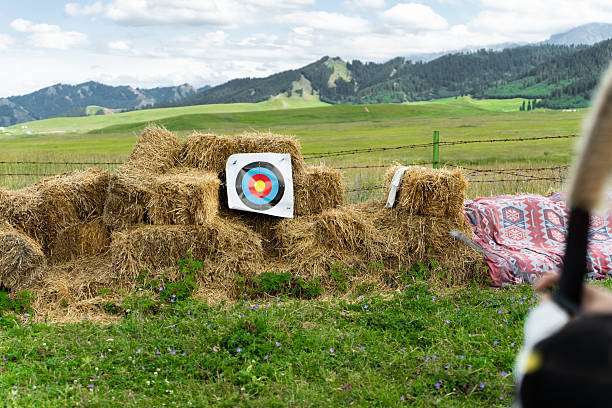
V. The Hidden Impact of Equipment Setup on Competition Stability
Many shooters frequently adjust their equipment before a competition in hopes of achieving “peak performance,” but this very act can become a source of instability under high pressure. The Compound Bow ‘s equipment system is highly sensitive; any slight adjustment can alter the shooting feedback.
In a match, what a shooter needs most is familiarity, not a theoretically optimal solution. A stable equipment setup reduces the cognitive load on the brain, allowing attention to focus on execution. Conversely, introducing new tactile sensations or feedback before a match forces the brain to allocate extra resources to adapt to the change, which almost inevitably leads to failure under pressure.
High-level shooters typically finalize their equipment configuration weeks before a match, only conducting necessary checks during the game without making any structural adjustments. This restraint is not conservatism, but rather a profound understanding of the dynamics of high-pressure environments.
VI. A competitive mindset is not about being without desire or ambition, but rather about reconstructing one’s goals.
Many pieces of advice on the mindset for competition emphasize “don’t worry about the results,” but this is almost impossible for most compound bow shooters. A truly effective mental adjustment is not about denying the goal, but about reconstructing it.
In training, an archer’s goal is often to hit the bullseye or score a high score, but in competition, such goals can constantly trigger emotional fluctuations. The result of each arrow is given too much significance, thus interfering with the execution of the next arrow.
compound bow shooting shifts the focus from the result to the process. The archer focuses on whether each arrow fully executes its shooting procedure, rather than the specific spot where it lands on the bullseye. When the process is repeatedly mastered, the result naturally tends to stabilize.
This re-evaluation of goals will not diminish the competitive drive; on the contrary, it will help shooters maintain clarity and composure under pressure. The competition is not a place to prove oneself, but a place to execute one’s existing skills.
Conclusion: Under high pressure, stability is true strength.
The compound bow competition doesn’t reward the person who exerts the most force, nor does it reward the person who is least nervous. It rewards those who can still repeat the correct movements under pressure. High-pressure environments are not unexpected, but rather the norm in the competition.
the true relationship between rhythm, aiming, release, breathing, compound bow , and psychology, tension is no longer the enemy, but the fuel for focus. Doubling your compound bow hit rate doesn’t come from some mysterious technique, but from a complete mastery of the system’s stability.