12 Essential Buying Guidelines for Compound Bow: Huge Differences in Standards Between Beginners and Professionals

As one of the most popular pieces of equipment in modern archery, the compound bow , with its pulley system, energy storage capabilities, and high adjustability, allows both beginners and professionals to find suitable gear. However, choosing a compound bow is not a simple matter.
Beginners often focus only on appearance, price, or brand, neglecting key parameters that directly impact the shooting experience; while professional archers analyze from multiple dimensions, including structure, adjustment options, upgradeability, and performance limits, as almost every detail affects long-term performance.
Many beginners only discover after buying a bow that the draw length is unsuitable, the weight is difficult to control, there is excessive vibration, aiming is unstable, or even arrows cannot be matched. To avoid these problems and help you truly buy a compound bow that suits your needs and has room for improvement , this article will delve into twelve aspects of selection strategies, allowing both beginners and professionals to find their own criteria for judgment.
Selection of the distance is the primary criterion for ensuring user comfort.
The draw length determines whether an archer can complete the full range of motion naturally and effortlessly, making it one of the most crucial parameters when purchasing a compound bow . Many beginners don’t measure their arm span when buying their first bow, simply choosing a common draw length recommended by others.
This leads to awkward movements or even difficulty in achieving the full draw length, impacting training effectiveness. The correct approach is to have a professional measure your arm span and convert it to a suitable draw length. Experienced archers go further, choosing bows with adjustable pulley systems to correct draw lengths as training progresses, ensuring the movement remains optimally stable. Choosing the wrong draw length not only reduces accuracy but also increases muscle fatigue, causing instability and hindering further training.
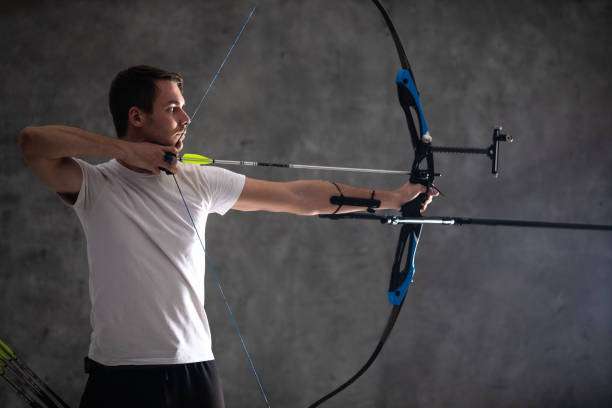
The choice of tension should be based on strength, training frequency, and intended use.
a compound bow determines the force required to draw the bow and the initial velocity of the arrow. Beginners often mistakenly believe that a higher draw weight is better, but in practice, they find it difficult to draw the bow and maintain a full draw. For beginners, a suitable draw weight is one that allows for a stable lock-on for an extended period without arm tremors.
Professional shooters typically choose their draw weight based on the competition event and distance to maintain consistent arrow speed, trajectory, and feel under different conditions. Draw weight also affects the stiffness of the shaft and the fit between the arrow and the arrowhead; therefore, choosing the right draw weight must consider the compatibility with the entire arrow system.
Too high a draw weight will lead to accelerated bow wear, while too low a draw weight will negatively impact shooting performance. Therefore, finding a range that suits your individual strength is extremely important.
The material of the bow frame determines the feel, vibration absorption, and overall durability.
for compound bows include aluminum alloy and carbon fiber, which differ significantly in weight, rigidity, and stability. Aluminum alloy compound bow frames are generally more cost-effective, structurally stable, and suitable for beginners; carbon fiber frames are lightweight, highly rigid, and significantly reduce vibration, but are also more expensive.
Professional riders typically prefer carbon fiber because it improves feel, enhances stability, and maintains comfort during extended training sessions. When purchasing a compound bow frame, it’s important to consider not only the material but also the fineness of the workmanship, the uniformity of CNC machining, and the reliability of the structural strength. The choice of material directly affects the bow’s lifespan and the stability of power transmission.
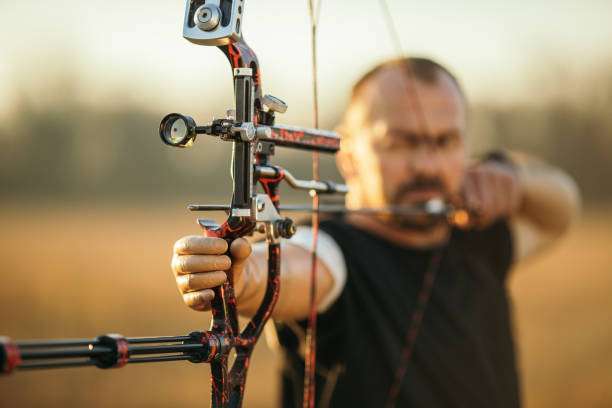
The pulley structure determines the upper limit of the bow’s performance and its adjustability.
a compound bow , and the shape, weight, torque curve, and adjustment method of each pulley all affect shooting performance. Beginners are better suited to a general-purpose pulley system with a wide adjustment range and simple operation, while professional players prefer high-performance pulleys that allow for detailed settings.
For example, fast-sliding pulleys can increase muzzle velocity, while soft-sliding pulleys are better for stable aiming. The balance of the pulleys is also extremely important; poor pulley design can cause asynchrony problems, affecting shooting stability. When purchasing, it is best to test the smoothness of pulley release, the continuity of the tension curve, and whether the draw feel suits your habits. The type of pulley not only affects the training experience but also determines the future upgrade potential of the bow.
Stabilizer mounting location and structural design affect vibration suppression effect
a compound bow is often overlooked by beginners, but it’s actually a crucial aspect affecting vibration absorption and overall balance. The stabilizer angle, mounting depth, and thread specifications offered by different bow frames directly determine the installation effect. Professional riders choose stabilizers of different weights and angles based on their own movement habits, and the effectiveness of the stabilizer depends on a suitable mounting position on the bow frame.
If the mounting position is too far forward, it may lead to uncontrollable overall tilt; if the angle is not ideal, the weights will not truly balance lateral forces. Therefore, when purchasing a compound bow , it’s essential to not only confirm whether the bow frame supports multiple stabilizer combinations but also check that the mounting position is sturdy and not easily loosened to ensure reliability during high-intensity training.
The aiming platform must be robust and highly accurate.
The sight is a crucial component determining accuracy, and the structural quality of its mounting platform directly impacts subsequent fine-tuning capabilities. Insufficient platform precision can cause deviations when adjusting the sight laterally or longitudinally, resulting in an unstable aiming point. Beginners often only check if it can be installed correctly, while professional shooters pay more attention to the flatness of the mounting surface, the accuracy of the screw holes, and the stability of the fixing structure.
A high-quality mounting platform significantly improves the transparency of sight adjustments, ensuring that every adjustment is directly reflected in the arrow’s impact point. When purchasing a compound bow, it is essential to ensure the sight mounting structure is robust to prevent loosening or displacement after prolonged use.
Arrow platform compatibility determines arrow release stability
Arrow rest compatibility is an easily overlooked yet far-reaching factor in compound bow selection. Different compound bow frames adapt differently to drop-type, fixed-type, or support-type arrow rests. Some frame designs limit the optimal mounting angle of certain arrow rests, thus affecting the trajectory stability of the arrow upon release.
Professional archers select suitable arrow rests based on arrow weight, fin design, and release characteristics; therefore, the bow frame must have sufficient compatibility and adjustment space. When selecting a bow, ensure the arrow rest mounting position has ample lateral and longitudinal adjustment space and check if it can be freely switched between different arrow rest structures to ensure flexibility for future upgrades.

The grip design affects the comfort and torque control of holding the compound bow.
The grip is the part of the compound bow hand that comes into direct contact with the equipment during shooting, and its shape, angle, and material significantly affect shooting stability. Beginners often neglect the grip, but an unsuitable grip can increase torque, cause aiming drift, and even exacerbate hand fatigue.
Professional shooters typically prefer grips with a slightly smaller angle and clear lines to reduce ineffective contact between the palm and the compound bow handle, thereby improving torque control. In terms of materials, rubber grips are comfortable but may increase torque risks, while wooden and composite grips offer a more defined feel. Grip selection must be based on a natural grip that does not require additional force, thus reducing vibration and deviation caused by a tight grip.
the compound bow is related to the endurance of long-term training.
of a compound bow affects endurance performance during training. A bow that is too heavy can easily cause shoulder and arm fatigue during the stationary phase, while a bow that is too light may cause extra bounce at the moment of release. Beginners often cannot judge whether the weight is appropriate, while professional players choose an appropriate weight range based on their muscle strength, training mode, and stabilizer combination.
The weight should not only consider the weight of the bare bow, but also the total weight of accessories such as sights, stabilizers, and arrow rests. If the bow is too heavy, prolonged training may lead to loss of control; if the bow is too light, it may be difficult to maintain a stable aiming rhythm. Therefore, weight selection must be based on a comprehensive assessment of one’s own physical condition and future training volume.
Upgradeability determines the future lifespan of the bow.
Compound bows are training equipment designed for long-term use. The greater their upgrade potential, the better they can adapt to the needs of an archer as their skills improve. Beginners often overlook upgradeability when purchasing, focusing only on current usability; while professional archers highly value factors such as modular interchangeability, pulley adjustment options, stabilizer expansion capabilities, and arrow head compatibility.
Excellent bows must offer sufficient room for growth in hardware, allowing archers to continuously optimize their setup as they increase strength, change techniques, or participate in different events. Choosing a bow with insufficient upgrade potential may necessitate future repurchase, resulting in repeated expenses.
A brand’s after-sales service and repair capabilities affect the reliability of long-term training.
Compound bows are complex mechanical structures, requiring significant maintenance, adjustment, and repair. When purchasing one, it’s crucial to consider the brand’s after-sales service, the stability of parts supply, and the reasonableness of maintenance schedules.
Professional enthusiasts typically choose brands that offer rapid repairs, precise adjustments, and long-term spare parts support, as bowstring wear and loose pulleys are inevitable during high-intensity training. After-sales service is just as important as the equipment’s performance; if problems arise and cannot be repaired promptly, training rhythm will be disrupted.
Actual feel determines final purchase decision
No matter how many specifications you see online or how many recommendations you hear, the key to ultimately deciding whether to buy a compound bow is still the actual feel in your hand. Every compound bow user has different body proportions, strength habits, and power generation patterns, so even the same model of compound bow will provide drastically different user experiences in different hands. Professional users will test the draw feel, static stability, release vibration response, and overall system balance before purchasing.
Actual testing can reveal many details that specifications cannot show, such as grip comfort, pulley curve smoothness, and stabilizer responsiveness. Before buying a compound bow , you must spend time doing thorough test shots to ensure the equipment meets your needs.
Conclusion
a compound bow is not a simple purchase; it’s a professional decision closely related to athletic performance. The vast difference in selection criteria between beginners and professionals stems from the fact that greater experience leads to higher sensitivity and demands for equipment details. Mastering the twelve core guidelines outlined above will help any bower avoid common pitfalls, find the right compound bow for themselves , and ensure stable performance throughout long-term training.