7 common psychological pitfalls in compound bow training: the harder you try, the easier it is to lose accuracy.

The Hidden Connection Between Psychological Misconceptions and Shooting Performance
Compound bow shooting is not only a test of physical strength, accuracy, and technique, but also a psychological battle. Many shooters work hard in training but find their performance stagnant, even faltering in crucial moments. The root of the problem is often not the technique itself, but the psychological pitfalls hidden behind training and competition.
These pitfalls can lead to excessive tension, distraction, and stiff movements, thus disrupting the originally precise shooting rhythm and muscle memory. Understanding the nature of these psychological pitfalls and adjusting them scientifically is key to improving shooting stability and accuracy. The core secret behind top shooters’ ability to maintain accuracy under high pressure lies in their ability to identify and correct these psychological pitfalls.
In compound bow training, a common psychological pitfall is a one-sided understanding of effort, focus, and technique. Novice shooters easily fall into a cycle of “the harder they try to pull the compound bow , the more force they exert; the more they stare at the target, the more tense they become,” neglecting the synchronization of movement coordination, mental rhythm, and muscle memory. These psychological pitfalls not only affect training effectiveness but can also amplify mistakes during competition, leading to the embarrassing situation of becoming increasingly inaccurate despite their efforts.
Myth 1: Excessive force equals high accuracy
Many archers believe that the harder they pull the compound bow and the tighter they aim, the higher their accuracy will be. This is a typical misconception. In reality, excessive force leads to tense hand muscles and stiff movements, disrupting the fluidity and stability of the action. Top compound bow archers emphasize that the force used to pull the compound bow should be matched to the weight of the arrow, the distance, and muscle endurance; maintaining a natural chain of motion is key to consistent accuracy. Excessive force not only increases hand fatigue but also interferes with breathing rhythm and aiming accuracy, making compound bow archers prone to inaccurate shots in crucial moments.
Beginners often try to compensate for technical deficiencies by increasing force during training, but this method can easily lead to false muscle memory, making movements unnatural and reducing stability in the long run. A common psychological misconception is confusing strength with precision, neglecting the importance of movement coordination and mental rhythm.
Myth 2: Excessive focus leads to rigid attention.
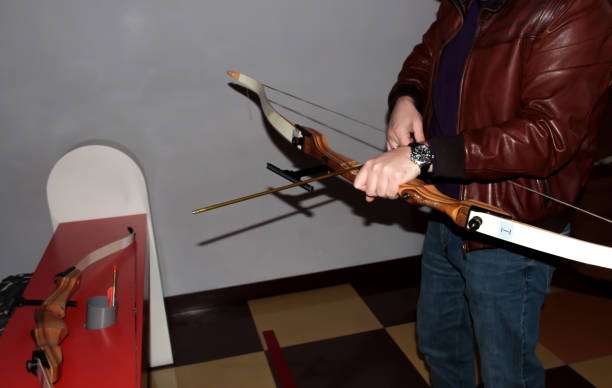
Many archers focus too intently when aiming, trying to completely lock onto the target, the arrow, and the aiming point, neglecting mental and physical flexibility. Excessive focus can lead to rigidity, causing the archer to lose fluidity in their movement chain. Top archers train through visual concentration, allocating attention to the target, breathing, and coordination of movement, rather than simply staring at the aiming point. This allows them to maintain focus while ensuring natural and fluid movements.
Beginners often mistakenly believe that the stronger the focus, the better, resulting in aiming point drift, hand stiffness, and disordered breathing. The psychological misconception lies in understanding focus as a single point of lock-on, while ignoring the overall coordination of the movement and the mental rhythm.
Myth 3: Suppressing emotions can improve stability
In training, some compound bow shooters believe that suppressing emotions can reduce errors and improve movement stability. However, emotional suppression often backfires, increasing psychological pressure and causing stiff movements and rapid breathing. Top compound bow shooters emphasize that emotional management is not about suppressing emotions, but about identifying, regulating, and rationally guiding them to ensure a high degree of alignment between mental state and the movement chain. In competition or training, moderate emotional release can actually help reduce pressure and improve focus and coordination.
Novice shooters often suppress their nervousness out of fear of making mistakes, resulting in premature release or stiff movements during crucial shots. This psychological misconception lies in misunderstanding the relationship between emotional suppression and psychological stability, and neglecting the importance of emotional regulation.
Myth 4: Technical movement training can ignore psychological rhythm.
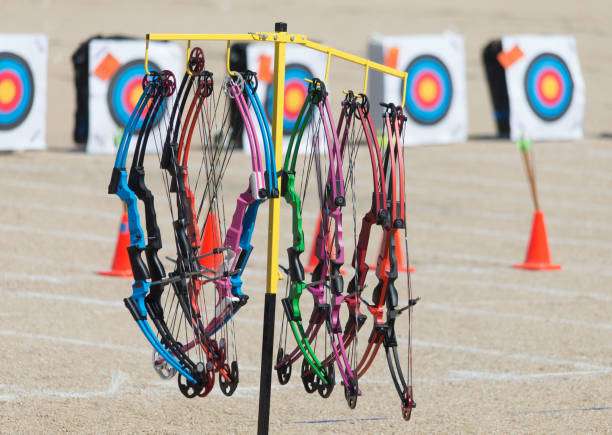
Many shooters focus solely on standardizing their movements during training, neglecting the cultivation of mental rhythm. While standardized movements are important, mental rhythm determines the stability of those movements in actual competition. Top compound bow shooters integrate mental rhythm into every compound bow pull and release motion through breathing control, movement synchronization, and mental suggestion training, ensuring fluidity even under pressure. Synchronizing mental rhythm with the movement chain is key to maintaining consistent accuracy.
Beginners who focus solely on technical movements and neglect mental rhythm may experience broken movements or premature release under competition pressure, leading to a decrease in accuracy. A psychological misconception lies in separating action from mental focus and underestimating the impact of mental rhythm on shooting stability.
Myth 5: The more competition experience you have, the less psychological pressure you will experience.
compound bow shooters mistakenly believe that accumulating match experience can completely eliminate psychological pressure. However, psychological pressure is closely related to a compound bow shooter’s mental state, the match environment, and the desired outcome.
Even experienced shooters may experience psychological fluctuations under high-pressure matches or in unfamiliar environments. Top shooters combine experience with psychological adjustment through systematic psychological training, enabling them to maintain focus and stability in various matches. Experience is not a natural psychological immunity; rather, it needs to be developed in tandem with psychological training.
Novices often misunderstand the role of competition experience and neglect the importance of mental training, resulting in nervousness and mistakes in crucial shots. This psychological misconception lies in overestimating the resilience of experience to psychological pressure while ignoring the necessity of mental adaptation training.
Myth 6: An excessive pursuit of perfection can lead to performance breakdown.
When archers strive for perfect form in training, they can easily become overly fixated on minor deviations, increasing their psychological burden and tension. Top compound bow archers emphasize that while precision is important, excessive pursuit of perfection can disrupt the naturalness of movement and mental rhythm. In training and competition, the focus should be on the overall stability and continuity of movement, rather than striving for zero error in every single movement. The psychological misconception lies in equating perfection with success, while ignoring the importance of natural and fluid movement.
Beginners often prolong aiming time and become stiff in their pursuit of perfection, sometimes even releasing prematurely or exhibiting chaotic movements during crucial shots. This psychological misconception stems from misunderstanding the relationship between striving for perfection and maintaining stable movements, neglecting the holistic relationship between mental rhythm and physical coordination.

Myth 7: Ignoring mental training and relying solely on physical exercise can lead to improvement.
Many shooters believe that simply increasing shooting volume and muscle strength training will improve accuracy. In reality, compound bow shooting is a sport highly dependent on mental stability and focus. Top compound bow shooters integrate psychological factors with movement practice through systematic mental training, including breathing control, visual focus, stress simulation, and emotion regulation, enabling them to maintain standardized physical movements even under psychological pressure. Mental training is just as important as physical training; neither can be neglected.
Even if beginners achieve a certain level of physical strength and standardized movements, neglecting mental training can still lead to significant inaccuracies during competitions or under pressure. A common misconception is underestimating the decisive role of psychological factors in shooting performance and relying solely on physical training to improve results.
Systematic identification and correction of psychological misconceptions
Understanding and identifying these seven psychological pitfalls is the first step for shooters to improve consistency and accuracy. Top shooters analyze the manifestations of these pitfalls during training by recording movements, mental states, and match performances, and then systematically correct them using psychological training methods.
For example, they reduce excessive force through breathing control, avoid attentional rigidity through visual focus training, avoid emotional suppression through mental suggestion and emotional management, overcome match tension through stress simulation and mental rhythm training, avoid excessive pursuit of perfection through setting reasonable goals, and compensate for lack of experience by combining psychological and physical training. Through long-term practice, shooters can develop psychological resilience and stable focus, ensuring high accuracy and consistency in every compound bow , aim, and release.
Correcting psychological misconceptions not only improves accuracy but also reduces psychological burden during training and competition, making shooters more confident and focused. Shooters who consistently ignore psychological factors, even with proficient techniques, are prone to inaccurate shots at crucial moments, creating a vicious cycle of “the harder they try, the less accurate they become.”
Summarize
compound bow training—overexertion, excessive focus, emotional suppression, ignoring mental rhythm, overestimating competition experience, excessive pursuit of perfection, and neglecting mental training—play a crucial role in shooting consistency and accuracy. Top shooters transform these psychological pitfalls into motivation for improved focus and precision through systematic mental training, stress simulation, and synchronized action and mental training.
Beginners who can identify and correct these pitfalls during training will significantly improve training efficiency and competition results, avoiding the embarrassing situation of “the harder you try, the less accurate you become.” The high degree of integration between mental and technical training is the core guarantee for compound bow shooters to maintain stable accuracy and continuous improvement under high-pressure environments.
Recognizing and correcting psychological misconceptions is a crucial bridge for compound bow shooters to improve their technical skills and increase their win rate in matches. Only by mastering both technical skills and psychological control can compound bow shooters truly unleash their potential in training and matches and achieve consistently high-level performance.
FAQ
Question 1: What are the most common manifestations of inaccuracy caused by psychological biases?
Common manifestations include stiff movements, aiming drift, disordered breathing, and psychological tension leading to premature or delayed release.
Question 2: How can psychological training be combined with motor training?
By using breathing control, visual focus, psychological suggestion, and stress simulation, psychological rhythm is integrated into the chain of pulling the compound bow , aiming, and releasing the movement, achieving synchronization between mind and movement.
Question 3: How to avoid the cycle of “the harder you try, the less accurate you become”?
Identify psychological pitfalls, allocate attention reasonably, control effort, manage emotions, and combine psychological training with physical training to make movements natural and fluid, and maintain a stable psychological rhythm.
Related Posts
6 psychological training methods for compound bow archers: the harsh reality that focus determines victory or defeat.
-
Posted by
 Johnpaul Cremin