5 secrets to breathing and power generation in Compound Bow , easily mastering stable shooting

In compound bow shooting, the coordination of breathing and power generation is crucial to accuracy and shooting stability. Many beginners, even with the correct stance and compound bow technique, still find their arrows deviating from the target, often due to improper breathing control or uneven power generation. Archery is not only a physical activity but also a precise and coordinated sport, requiring close cooperation between the eyes, hands, shoulders, core muscles, and respiratory system. This article will delve into the five key secrets of compound bow breathing and power generation to help beginners and advanced archers achieve stable shooting and easily master accurate shooting techniques.
I. Understanding the Importance of Breathing and Power Generation
Breathing and power generation in compound bow shooting not only affect arrow stability but also directly impact body comfort and the smoothness of movement. Excessive breath-holding or rapid breathing can tense the arms and shoulders, causing slight tremors that affect the arrow’s trajectory. Conversely, proper coordination of breathing and power generation not only stabilizes upper limb movements but also helps coordinate core muscle activation, resulting in a natural and fluid compound bow draw. Understanding the impact of breathing on power generation is fundamental for archers to master accurate shooting and is the first step in improving hit rate.
II. Establishing a correct breathing rhythm
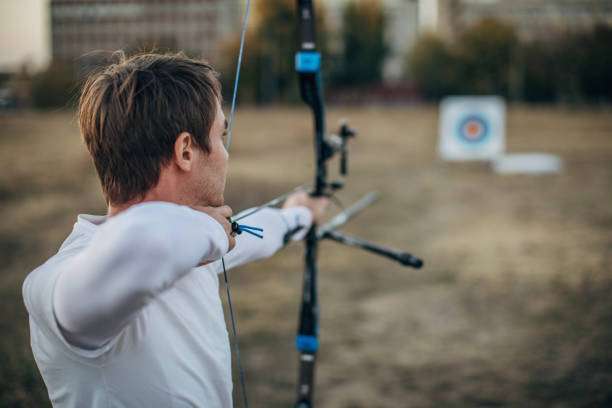
Breathing rhythm plays a crucial role in shooting. The ideal breathing method involves controlling body stability through steady diaphragmatic breathing. During the compound bow , maintain even, deep breaths to keep the body relaxed. Just before release, gently hold your breath, allowing your shoulders and arms to reach optimal stability. This rhythm reduces muscle tremors and improves the stability of the arrow’s trajectory. Long-term training in diaphragmatic breathing allows archers to remain calm under pressure and reduce shooting errors.
III. Coordinated exertion of core muscles
Coordinating breathing and power generation involves not only the arms and shoulders but also the core muscles. During shooting, the abdominal, back, and lower back muscles should engage simultaneously to support upper limb movements. The correct way to generate power is to allow the core muscles to bear the primary stability task, while the arms mainly guide the arrow’s trajectory. Beginners can practice by slowly pulling the compound bow and coordinating their breathing to feel the rhythm of core muscle engagement, thus maintaining stability in actual shooting. Coordinated core muscle engagement not only improves accuracy but also effectively reduces shoulder and arm fatigue.
IV. Arm and Shoulder Relaxation Techniques
Relaxation of the arms and shoulders is crucial in coordinating breathing and power generation. Overly tense arms will make the compound bow draw stiff, affecting the arrow’s trajectory. The archer should keep their shoulders down and arms naturally bent during inhalation and exhalation, controlling the arrow’s direction through slight muscle adjustments. Relaxation techniques can be developed through warm-up, stretching, and slow draw training, allowing the arms and shoulders to remain flexible and comfortable during actual shooting, thereby improving stability and accuracy.
V. Breathing preparation movements before shooting
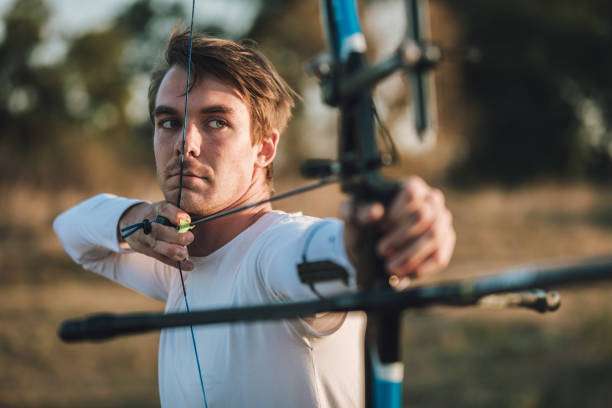
Performing preparatory breathing exercises before each shot significantly improves an archer’s stability. Before drawing the compound bow, archers can take several deep breaths to clear their minds, stabilize their heart rate, and bring their bodies into optimal condition. During the compound bow, maintain natural breathing until just before release, holding their breath and concentrating fully. This ensures that the fine-tuning of the arm and shoulder movements is optimal. Preparatory breathing before shooting not only improves accuracy but also enhances mental focus, laying the foundation for a high hit rate.
VI. Practice and Repeated Perception
Coordinating breathing and force exertion is not something that can be achieved overnight; it requires systematic training and repeated practice to gradually master. In daily training, archers can initially disregard the arrow’s flight and focus instead on the coordination of breathing rhythm, core muscle engagement, and arm relaxation. Through slow, repetitive movements, the body gradually develops muscle memory, naturally regulating breathing and force exertion during actual shooting. By combining training records and feedback, archers can continuously optimize the coordination of breathing and force exertion, making the movements smoother and more stable.
VII. Psychological Stability and Breathing Control
Breathing control is not only a requirement of physical movement but also an important means of psychological stability. Shooters often hold their breath or breathe rapidly due to tension when aiming and drawing the compound bow, which leads to stiff movements and shooting errors. Through breathing training, shooters can learn to remain calm, concentrate, and stabilize arm and core muscle movements under pressure. Psychological stability and breathing coordination complement each other, contributing to high accuracy in competitions or outdoor environments.
8. Application of Breathing and Force Exertion at Different Distances
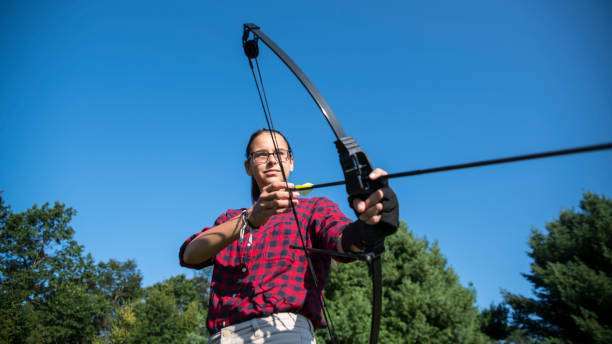
As shooting distance increases, the arrow’s flight time lengthens, raising the requirements for coordination between breathing and power generation. In short-range shooting, movements and breathing rhythm can be slightly faster, but arms and shoulders must remain relaxed. In long-range shooting, the shooter must more strictly control their breathing rhythm, engage their core muscles more evenly, and pay attention to stability at the moment of release. Practicing at different distances helps shooters fully master the application techniques of breathing and power generation, achieving an all-round improvement in shooting accuracy.
IX. Conclusion
Compound bow shooting depends not only on the compound bow itself and the arrow but also on the perfect coordination of breathing and power generation. By mastering five key secrets—understanding the importance of breathing and power generation, establishing a correct breathing rhythm, coordinating core muscle power, arm and shoulder relaxation techniques, and pre-shoot breathing preparation—shooters can maintain stable movements and mental composure in every shot, achieving accurate hits. Continuous practice and scientific training not only allow beginners to quickly get started but also enable advanced shooters to perform at their best in competitions. Mastering the secrets of breathing and power generation is a crucial step for every compound bow shooter towards high-accuracy shooting.